Menu
Close
Setting up a commercial direct-to-film (DTF) print shop requires more than simply buying the fastest machine on the market. You need to know if your building can actually support the equipment. Tripped breakers, cramped production floors, and poor ventilation create immediate bottlenecks that ruin efficiency. Before you bring a high-volume printer into your facility, you need a realistic floor plan and an accurate electrical audit.
Whether you are upgrading to an automated workflow or building a new facility from the ground up, understanding the precise space and power requirements ensures your production runs safely and consistently. Here is exactly what you need to prepare for a professional DTF installation.
A true commercial DTF workflow is not a desktop operation. It is an inline manufacturing process. The film moves continuously from the printer to the powder shaker, through the curing oven, and finally onto a take-up reel. You have to account for the entire footprint, plus the room your operators need to work.
The size of your printer depends on your production volume. A compact commercial unit like the Son of a Gladiator 17-inch printer or the UFO 24-inch system will naturally require less room than an 8-head powerhouse like The Kraken. For a standard 24-inch setup, the printer alone is typically around five to six feet wide.
However, you cannot push these machines directly against a wall. You must leave at least two to three feet of clearance on all four sides. Operators need space to load heavy rolls of film, access the rear of the machine for maintenance, fill bulk ink tanks, and easily reach the capping station and print heads for daily cleaning.
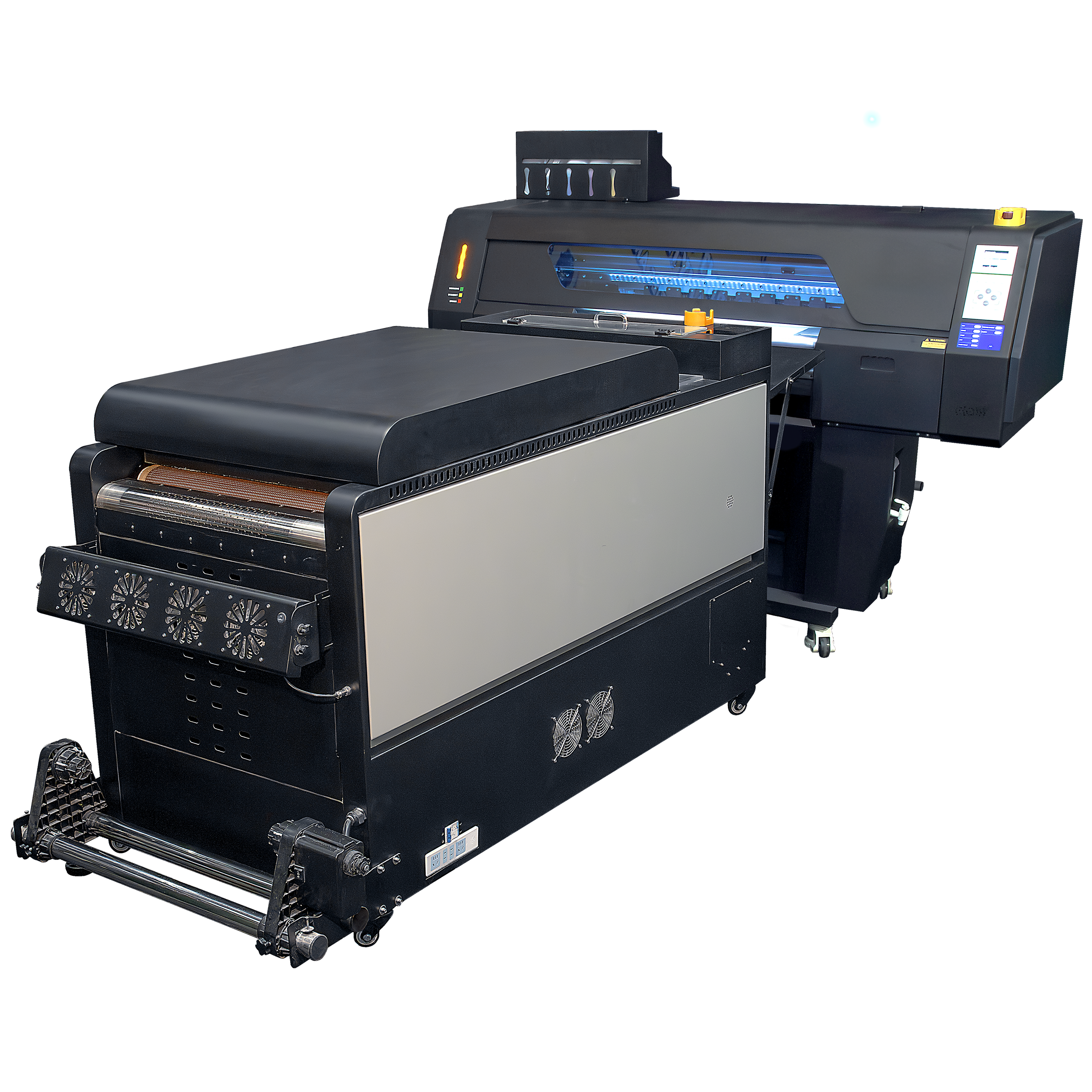
The powder shaker and curing oven sit directly in line with your printer. This is where the physical footprint expands significantly. An extended smart duster paired with a high-speed printer can add another five to eight feet of length to your setup.
When planning your layout, treat the printer and the shaker as a single, immovable unit. A standard commercial line requires a minimum operating footprint of roughly 15 feet long by 8 feet wide. Ensure the path is entirely straight; any misalignment between the printer and the duster will cause the film to track incorrectly, leading to wrinkles and ruined transfers.
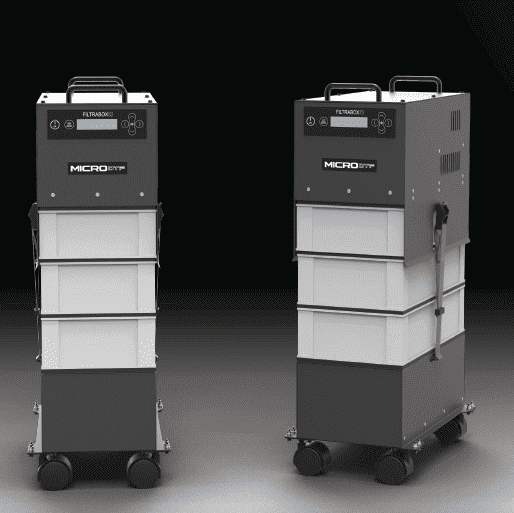
Heating DTF powder creates smoke, vapors, and oily residues that must be managed. A heavy-duty air purification system, such as a Filtrabox Micro or a DTF 250W Industrial Filtration Fume Extractor, is mandatory.
These extractors are typically the size of a small filing cabinet and sit on the floor next to the curing oven. You need to budget space for the unit itself and the flexible ducting that connects it to the oven’s exhaust ports. Proper positioning ensures the hose does not kink or restrict airflow, which keeps your shop clean and compliant with safety standards.
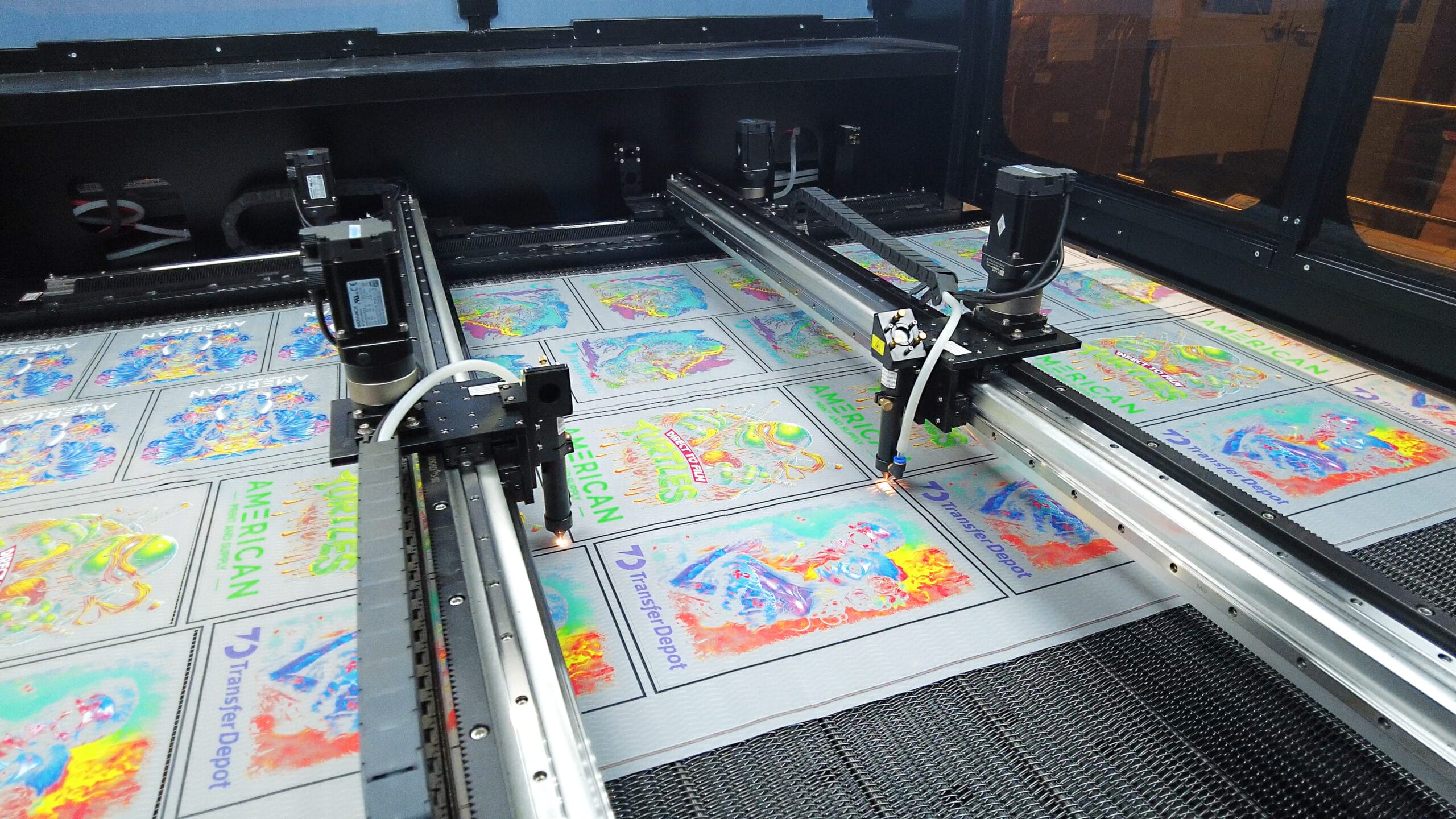
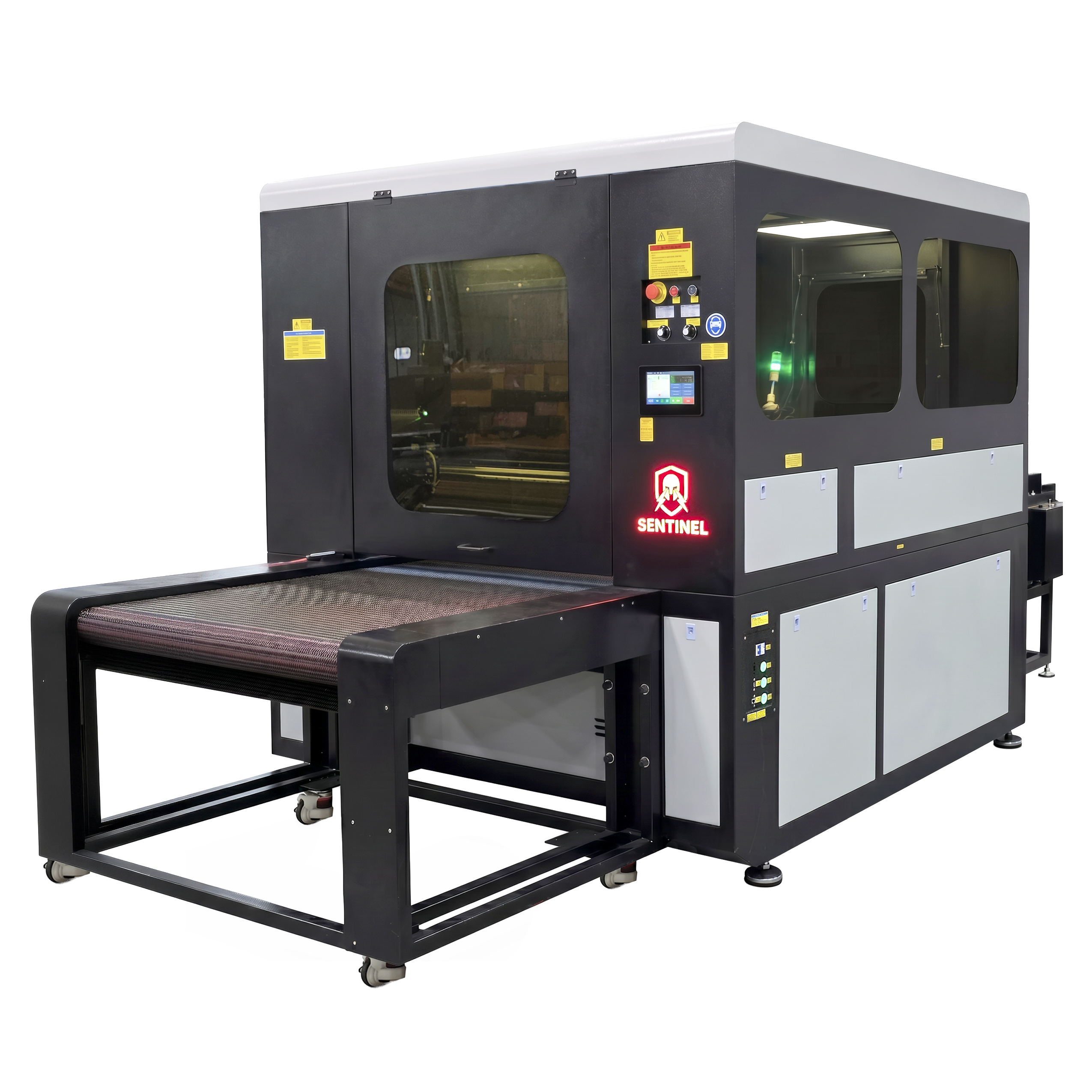
Printing is only half the workflow. Once the transfers are printed and cured, they must be separated and pressed. If your shop uses high-speed automation like The Sentinel—our vision-based laser cutter designed to eliminate the cutting bottleneck—you will need space for its 64-inch cutting bed and integrated exit conveyor.
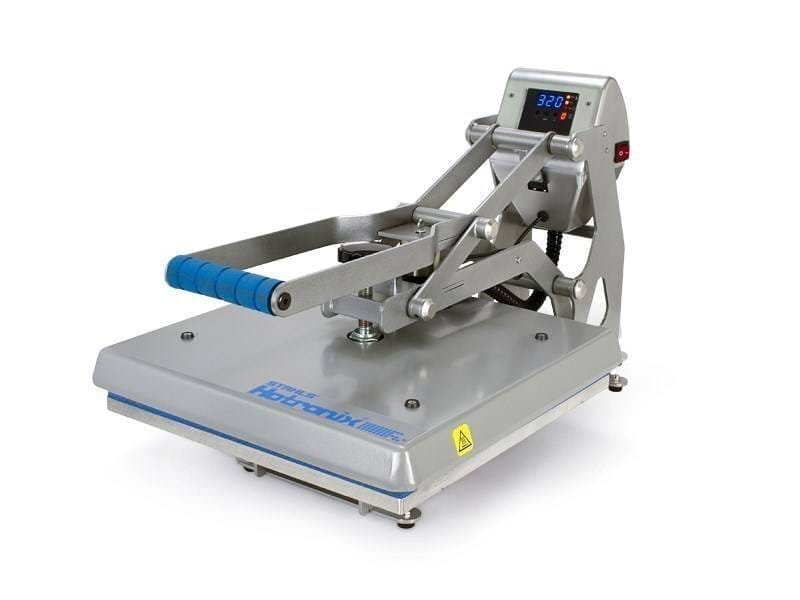
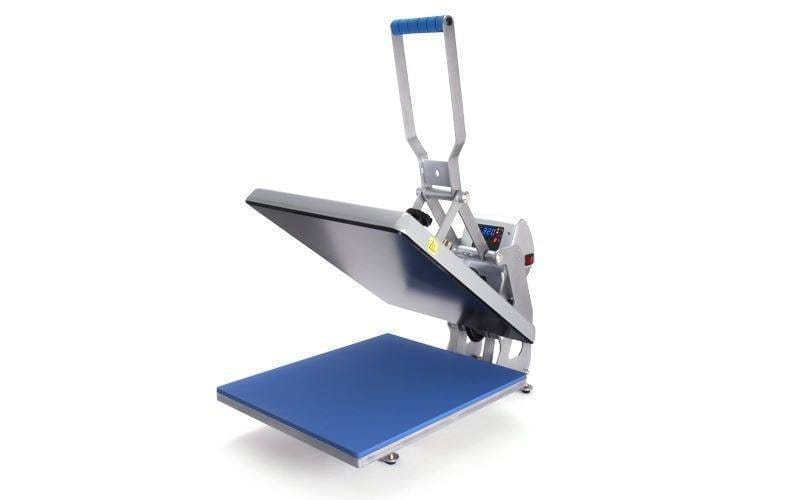
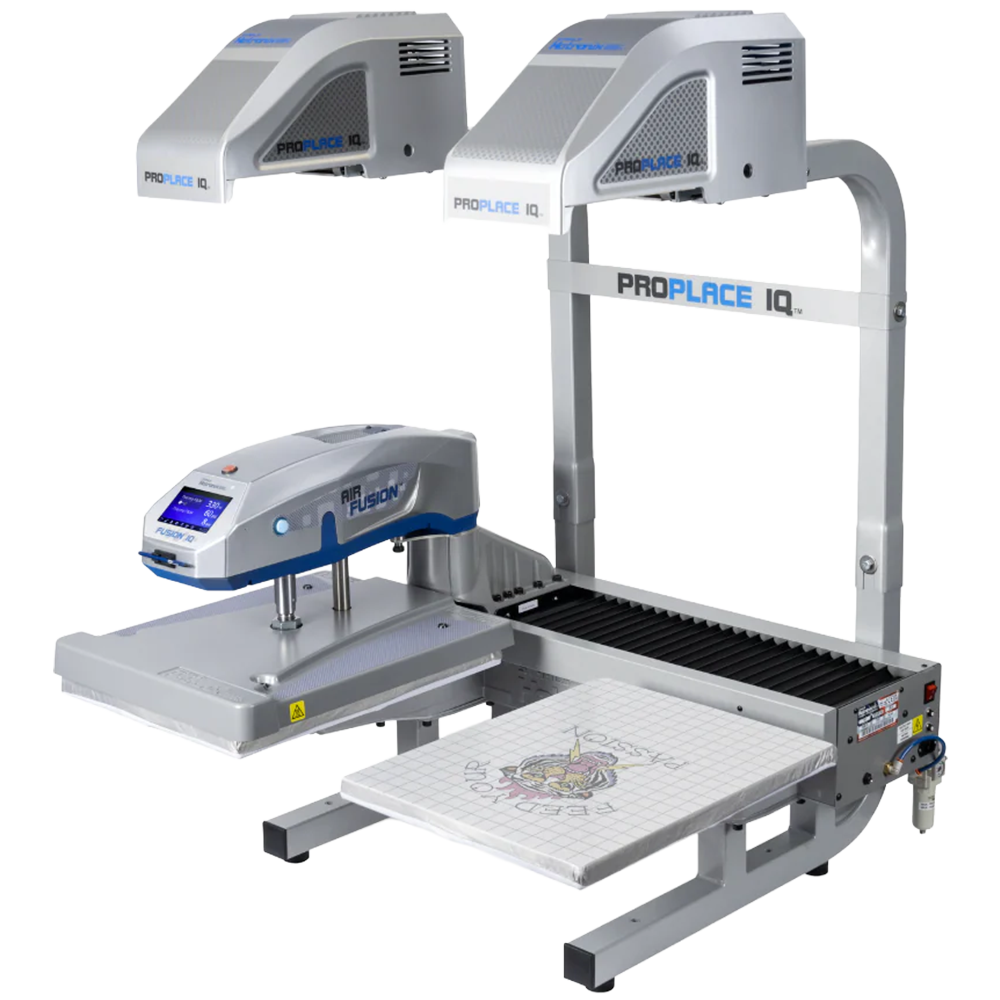
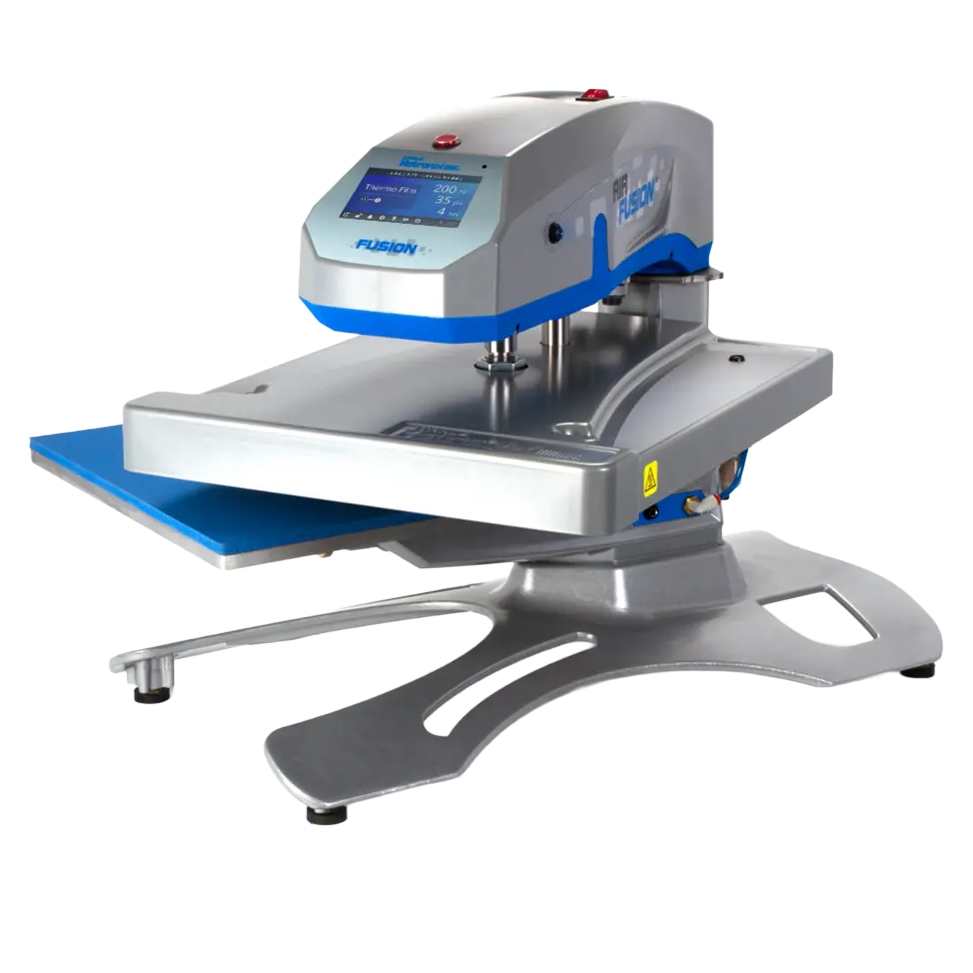
Add another designated area for your heat presses. Commercial units, like the Hotronix Dual Air Fusion IQ Heat Press, require sturdy, industrial workbenches and plenty of staging space for blank garments and finished apparel. Keeping your cutting and pressing stations separate from the printing line prevents fabric lint and dust from contaminating your print heads.
Power is the most common hurdle for new DTF operators. You cannot simply plug a full-scale commercial print line into standard office wall outlets. Heating elements draw massive amounts of electricity, and failing to prepare your electrical panel will result in blown fuses and damaged electronics.
Most DTF printers operate on standard 110V power. The printer’s primary job is simply moving the carriage and firing ink, which is not highly power-intensive.
The real power draw comes from the powder shaker and curing oven. While some smaller 17-inch units run on 110V, any commercial 24-inch to 48-inch system—like the systems paired with The Hydra or The Kraken—will require dedicated 220V single-phase power. Before purchasing equipment, you must hire a licensed electrician to verify that your building can support 220V lines.
Even if you have the correct voltage, you must meet the amperage requirements. A commercial curing oven uses heavy-duty tungsten wire heating bulbs and high-powered vacuum blowers to cure the adhesive powder at high speeds.
A typical 24-inch smart duster requires a dedicated 30-amp to 40-amp circuit. If you attempt to run other equipment on the same breaker, the initial power draw when the oven heats up will immediately trip the system. Make sure your electrician installs isolated breakers specifically designated for your curing equipment.
Do not forget to calculate the electrical load for your secondary equipment. Fume extractors generally run on standard 110V circuits but pull continuous power to run their internal vacuums.
Heat presses are another massive draw. A commercial 16×20 heat press pulls an average of 15 to 20 amps. If you plan to operate two or three Hotronix presses simultaneously to keep up with your DTF output, each press needs its own dedicated 20-amp, 110V circuit. Grouping them on a single circuit is a guaranteed way to cause constant power failures during peak production hours.
Your shop environment is just as critical as the physical space and the power supply. DTF ink, film, and powder are highly sensitive to climate changes. You must dedicate resources to controlling the environment around the machines.
For consistent print quality, your production room needs to maintain a temperature between 70 and 75 degrees Fahrenheit, with relative humidity held strictly between 40 and 60 percent.
If the air is too dry, static electricity will build up on the film, causing ink overspray and making the powder stick where it shouldn’t. If the air is too hot or humid, the water-based DTF ink can dry inside the print heads, leading to severe clogs. You must allocate space and power for commercial humidifiers, dehumidifiers, and precise climate control systems to protect your investment.
Building a professional print environment requires careful planning. It is not a process you should guess your way through. At American Print & Supply, we do not just sell machines and walk away. Our focus is on white-glove workflow support and ensuring your facility is fully prepared before delivery day.
When you invest in systems like The Kraken or The Sentinel, our team works with you to review your floor plan, provide exact electrical specifications, and map out a layout that maximizes throughput. From the initial facility audit to the multi-day on-site training and installation, we ensure your infrastructure aligns perfectly with your production goals.
Evaluating your space and power requirements early prevents costly downtime. By dedicating the right square footage, running isolated circuits, and maintaining strict environmental controls, you build a foundation for reliable, high-volume production.