
Menu
Close
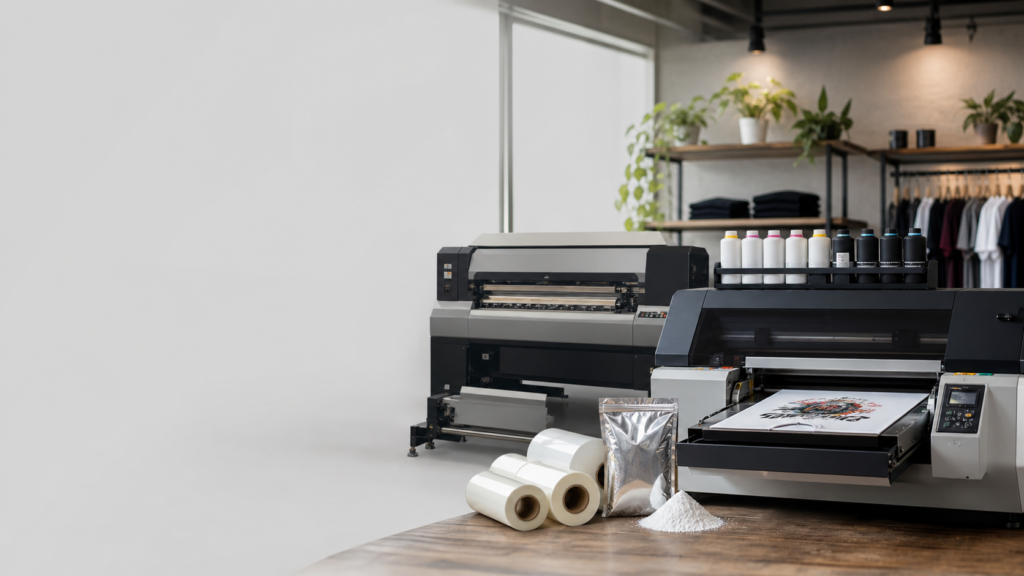
The Direct to Film printing industry has matured rapidly. As high-volume print shops upgrade to faster, automated systems like the 8-head Kraken or add vision-based laser cutters like The Sentinel to their floors, the secondary market for older DTF printers is expanding. If you are looking to scale your production capacity without the initial cost of a brand-new system, buying used is a practical option.
However, purchasing pre-owned print machinery is not like buying a used car. The health of a printer relies heavily on how the previous owner maintained the ink lines, print heads, and environmental conditions. Knowing where to look and how to identify reliable hardware can save you from buying a costly repair project. This guide covers how to navigate used DTF equipment marketplaces and trusted sellers, ensuring you make a smart investment for your shop.
Finding the right machine starts with looking in the right places. Not all marketplaces offer the same level of security or seller transparency. Here are the most common avenues for sourcing used DTF hardware.
Dedicated online communities, such as Facebook groups for apparel decorators and specialized print forums, are excellent places to find used equipment. Because these platforms are heavily moderated by experienced printers, sellers are usually held accountable by the community. You can often see the seller’s post history, which gives you a clear idea of whether they are a professional shop upgrading their gear or someone abandoning a poorly maintained machine.
The safest route for purchasing used equipment is through a certified dealer. Many reputable suppliers take trade-ins when customers upgrade to larger commercial-duty systems like the Artemis or the Hydra. Dealers will inspect, clean, and replace critical wear parts like capping stations and dampers before reselling the unit. While this route might cost slightly more than a private sale, it often comes with limited support, software assistance, and the peace of mind that the machine is in working order.
Platforms like eBay, Craigslist, or local business liquidation sites frequently list DTF equipment. While you can sometimes find a great deal here, these marketplaces carry the highest risk. Buyers are entirely reliant on the seller’s honesty regarding the machine’s condition. If you use these platforms, it is critical to inspect the equipment in person before transferring any funds.
When buying directly from another print shop, you need to verify both the seller’s credibility and the machine’s history. A trusted seller understands the technical needs of DTF printing and will be completely transparent about the equipment’s condition.
A trustworthy seller will have no problem running the machine for you. Ask them to perform a live video call where they print a nozzle check. The nozzle check is the ultimate indicator of print head health. If the lines are broken or the white channels are completely missing, the print heads will likely need replacing. If a seller claims the machine is boxed up and cannot be tested, walk away.
Direct to Film printers require daily and weekly maintenance to keep the white ink from settling and clogging the system. Ask the seller about their daily routine. What cleaning solution do they use? How often do they swap out their dampers, wiper blades, and ink filters? A reliable seller will know these answers immediately and should be able to tell you exactly when the Epson I3200 print heads were last replaced.
RIP software is the brain of your DTF printer. Programs like Digital Factory Direct to Film Edition (V11 or V12) or NeoStampa are expensive and require a license key or dongle to operate. A trusted seller will clarify whether the software is included in the sale and will assist in transferring the license into your company name.
If you are evaluating a specific used DTF printer, you need to check the components that suffer the most wear and tear. Knowing what parts need immediate replacement will help you negotiate a fair price.
White DTF ink contains titanium dioxide, which settles quickly if not kept in motion. Inspect the white ink tank to ensure the stirrer motor is functional. Check the white ink circulation pump and the ink lines. If the lines are stained a solid, chalky white rather than remaining somewhat translucent, the ink has likely separated and dried inside, meaning the entire line system, including dampers and manifolds, will need to be replaced.
The print heads are the most expensive consumable on the machine. If the previous owner let the machine sit idle for weeks without proper flushing and wet capping, the heads are likely ruined. Even if the heads are functioning, inspect the capping station. The capping station seals the print heads when not in use. If the rubber seals are warped, dried out, or crusted with old powder and ink, it will fail to protect the heads. Fortunately, replacement capping stations and OEM Epson print heads are readily available, but you must factor these costs into your initial purchase price.
The printer is only half of the workflow. The shaker and curing oven do the heavy lifting for finishing the transfers. Check the heating elements. Tungsten wire bulbs can burn out over time, leading to uneven curing. Ensure the conveyor belt moves smoothly without slipping and that the vacuum fans are operational. A faulty powder volume switch or a broken film feed sensor will disrupt your entire production line.
Used equipment serves a specific purpose in the market. It is ideal for shops that are mechanically inclined, have the time to troubleshoot hardware, and want a backup machine for their primary production floor. However, there is a distinct tipping point where buying used actually costs a business more than buying new.
When a used machine goes down, you are entirely responsible for the diagnosis, part sourcing, and repair. If you are spending three days trying to fix a clogged manifold or a bad mainboard, you are not printing. Missing client deadlines due to unreliable equipment hurts your reputation and your bottom line. You must ask yourself if the money saved on the initial purchase is worth the potential loss of revenue during downtime.
A successful print shop chooses its tools based on the demands of its customers. When your volume reaches a point where you are printing hundreds of gang sheets a day, a used entry-level printer will create a bottleneck.
This is where upgrading to commercial-duty systems like The Hydra or The Kraken makes sense. New systems from American Print & Supply provide dual servo-driven precision, magnetic drive rails, and robust environmental controls that older models lack. Most importantly, new equipment comes with comprehensive white-glove installation, multi-day onsite training, and ongoing workflow support. When you buy a new system, you are acquiring a dedicated support team that keeps your production running, rather than just buying a piece of hardware.
Whether you choose to source a machine from used DTF equipment marketplaces and trusted sellers, or you decide it is time to invest in a brand-new, high-capacity printing ecosystem, the goal is consistent, high-quality output. Evaluate your current volume, understand the maintenance requirements, and ensure you have a reliable partner for your bulk inks, premium films, and replacement parts.