Menu
Close
Direct to film printing has fundamentally changed custom apparel production. By allowing decorators to print vibrant, durable designs onto a film and transfer them to almost any fabric without pretreatment, it offers a distinct advantage over traditional methods. However, selecting the right equipment requires a careful evaluation of your current production needs and future growth goals. Understanding the key features to look for when buying a DTF printer for textile decoration will help you avoid costly bottlenecks and ensure your print shop operates at peak efficiency.
Whether you are upgrading from an entry-level desktop unit or expanding your industrial fleet, every component of a DTF system plays a role in your final output. Below, we outline the primary hardware, software, and support features you need to consider before making your next equipment purchase.
The print heads are the engine of any direct to film printer. They dictate not only the resolution and color quality of your transfers but also how fast your shop can produce them. When evaluating a machine, pay close attention to the print head configuration.
Industrial DTF printers rely on advanced print heads, such as the Epson I3200, which are known for their precision and longevity. The number of print heads directly impacts your production speed. For smaller operations, a dual-head system like the Artemis offers an excellent balance of quality and affordability. One head manages the color layer, while the second lays down the critical white underbase.
For high-volume fulfillment centers, a larger configuration is necessary. Machines like The Kraken feature an impressive eight-head setup. This allows for massive throughput, pushing out over 650 square feet per hour, while maintaining perfect registration and color density. Match the print head count to your daily order volume so you never leave your press operators waiting for transfers.
Standard CMYK printing covers most needs, but some clients require precise brand color matching or highly vibrant designs. Modern DTF systems offer extended color options, adding channels for fluorescent inks or specific colors like Red, Green, Blue, and Orange. If you frequently print vivid graphics or need to hit specific corporate colors, look for a printer that supports these extended color combinations.
DTF printing requires specialized pigment inks. Because the white ink contains titanium dioxide, it has a natural tendency to settle and cause clogs if not managed properly. A reliable ink management system is non-negotiable for consistent production.
You cannot afford downtime due to clogged print heads. Look for a printer that includes active white ink circulation and mechanical stirrers within the ink tanks. This continuous movement prevents the heavy pigment particles from separating and settling in the lines or dampers. A proper circulation system reduces the frequency of manual cleanings, saves ink, and extends the lifespan of your print heads.
Beyond circulation, premium printers feature inline ink filters that catch impurities before they reach the print head. This small hardware inclusion makes a massive difference in daily reliability. Clean, consistent ink flow guarantees that your white underbase remains opaque, which is essential for making your colors stand out on dark garments.
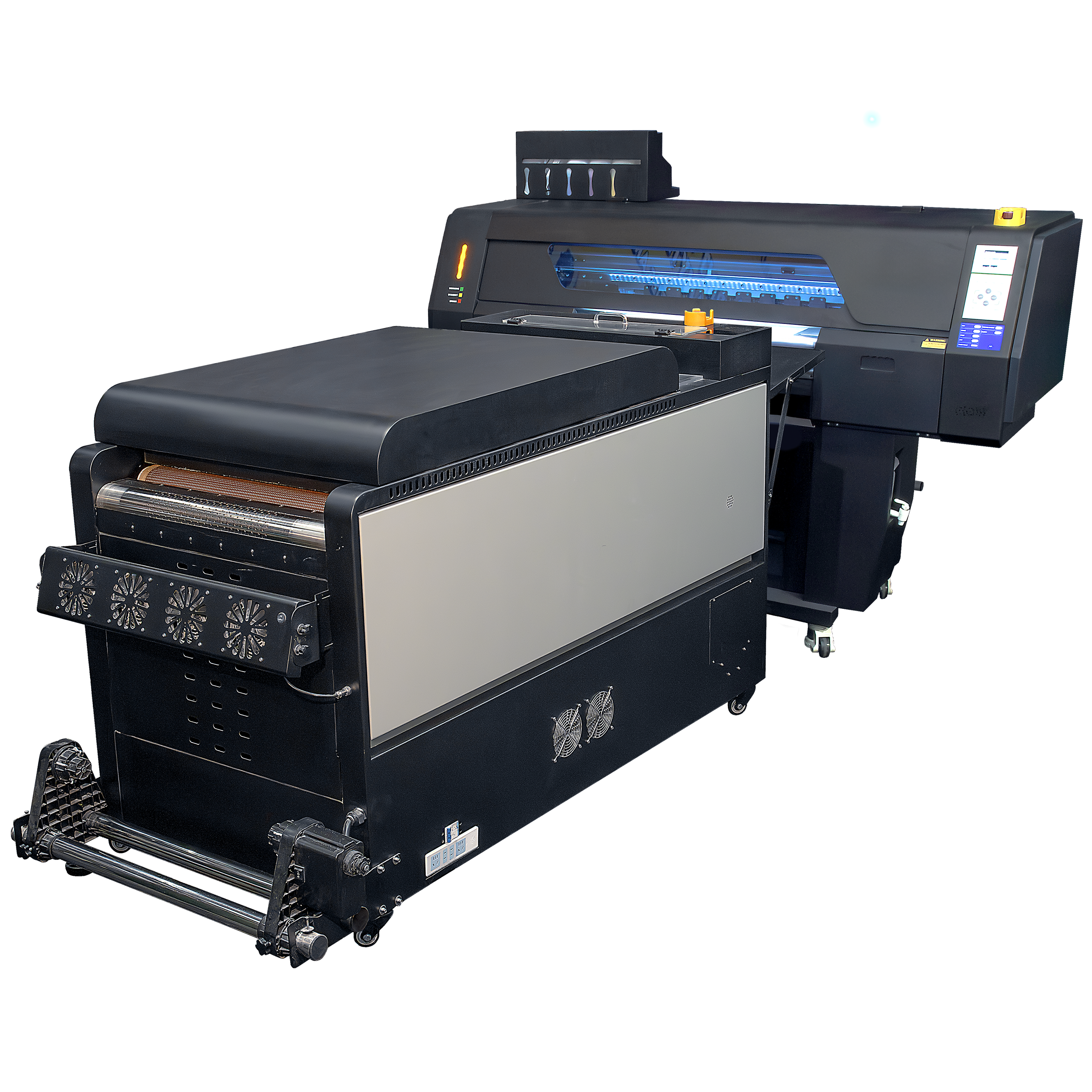
Printing the film is only the first step. The adhesive powder application and curing process must keep pace with your printer; otherwise, you will create a severe bottleneck. The shaker and oven unit, often called a duster, needs to be as efficient as the printer itself.
An effective smart duster automatically applies the exact amount of adhesive powder required, shaking off the excess for reuse. Look for systems with adjustable powder volume switches and integrated weight sensors that alert you when powder levels are low. This automation ensures a consistent, even coat of adhesive, preventing issues like peeling edges or stiff, uncomfortable transfers.
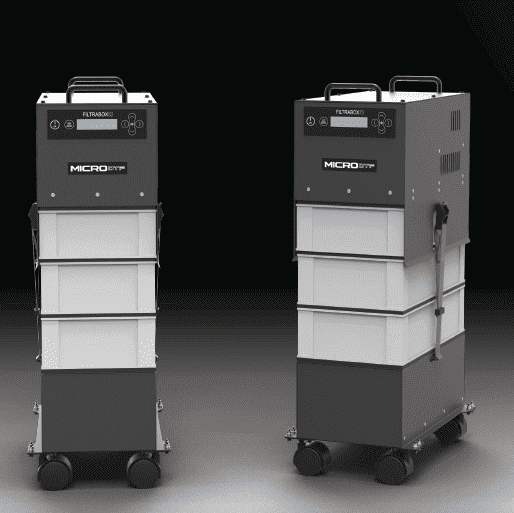
High-speed printers require high-speed curing. If your printer pushes out 600 square feet an hour, a standard heating element will not melt the powder fast enough. Look for extended smart dusters with dual oven designs or specialized top and bottom heat tungsten wire bulbs. Proper temperature control ensures the powder melts into a smooth, even layer without warping the transfer film. Additionally, always factor in a commercial-grade fume extractor to safely remove the vapors produced during the melting process.
As printing speeds increase, the physical stability of the machine becomes crucial. Vibrations or slight misalignments will ruin a print run. The structural build and internal mechanics of the printer determine how reliably it can handle large, heavy rolls of film.
Traditional belt-driven carriages are standard in the industry, but they can experience drag and wear over time, leading to micro-banding in your prints. High-end industrial printers utilize dual rail magnetic drive systems. This technology floats the carriage using magnets, eliminating friction and belt stretching. The result is flawless precision, smoother carriage movement, and significantly reduced maintenance.
When you are running 32-inch wide, 656-foot long rolls of Super Peel double-sided film, standard feed rollers are not enough. Your printer should feature auto-tensioning dual-roll feeders and industrial pinch rollers to keep the film perfectly flat and aligned. Wrinkled or shifting film will cause print head strikes, damaging your equipment and wasting materials.
Hardware is only half of the equation. The software running your printer dictates how efficiently your team can prepare files, manage colors, and cut the final product.
Your RIP software translates your design files into instructions for the printer. Advanced programs like Digital Factory V12 Direct to Film Edition or NeoStampa offer exceptional color management, automated nesting to save film, and custom ICC profiling. Good software allows your operators to knock out black backgrounds automatically, adjust choke on the white underbase, and drop files into hot folders for instant processing.
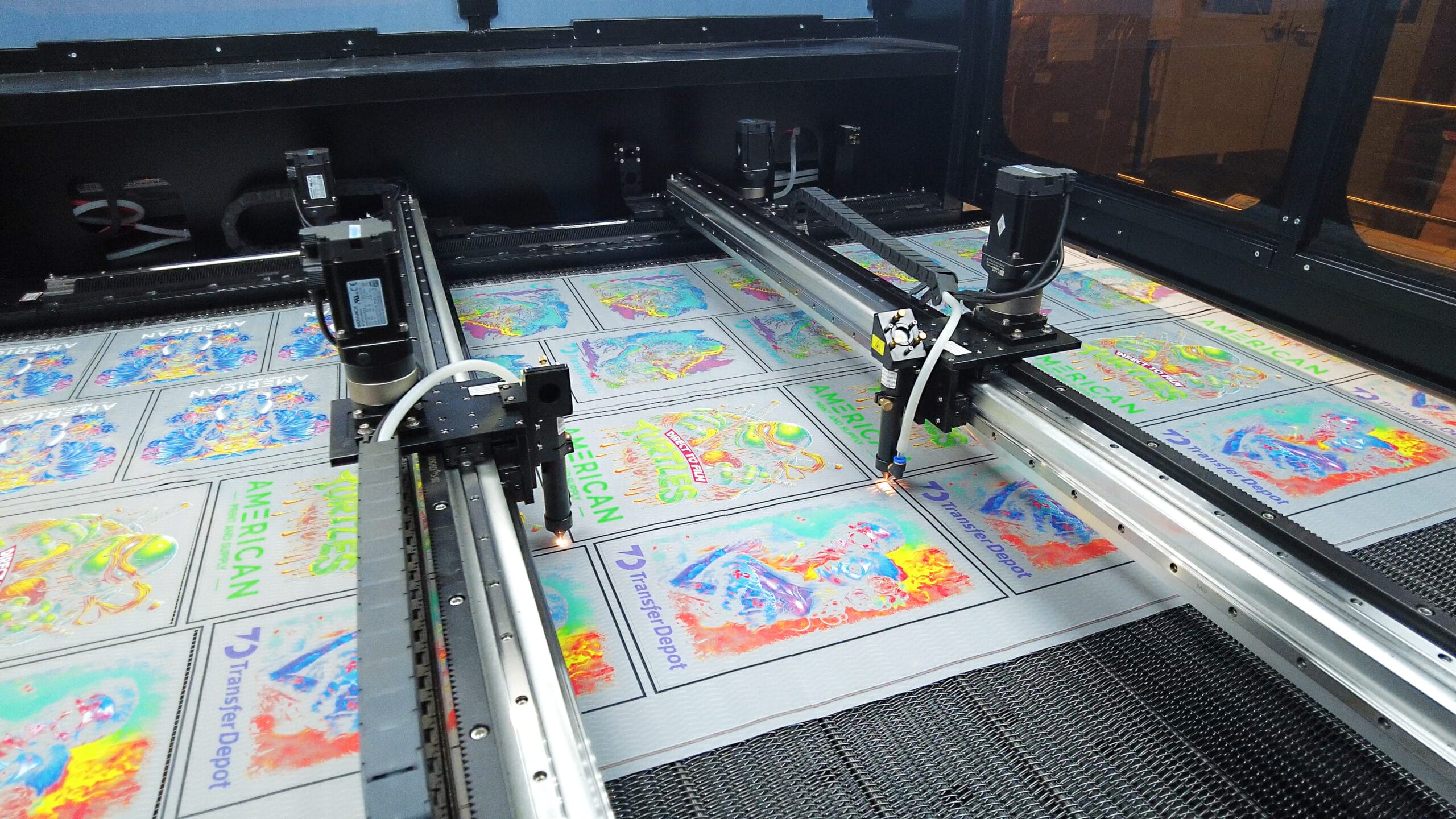
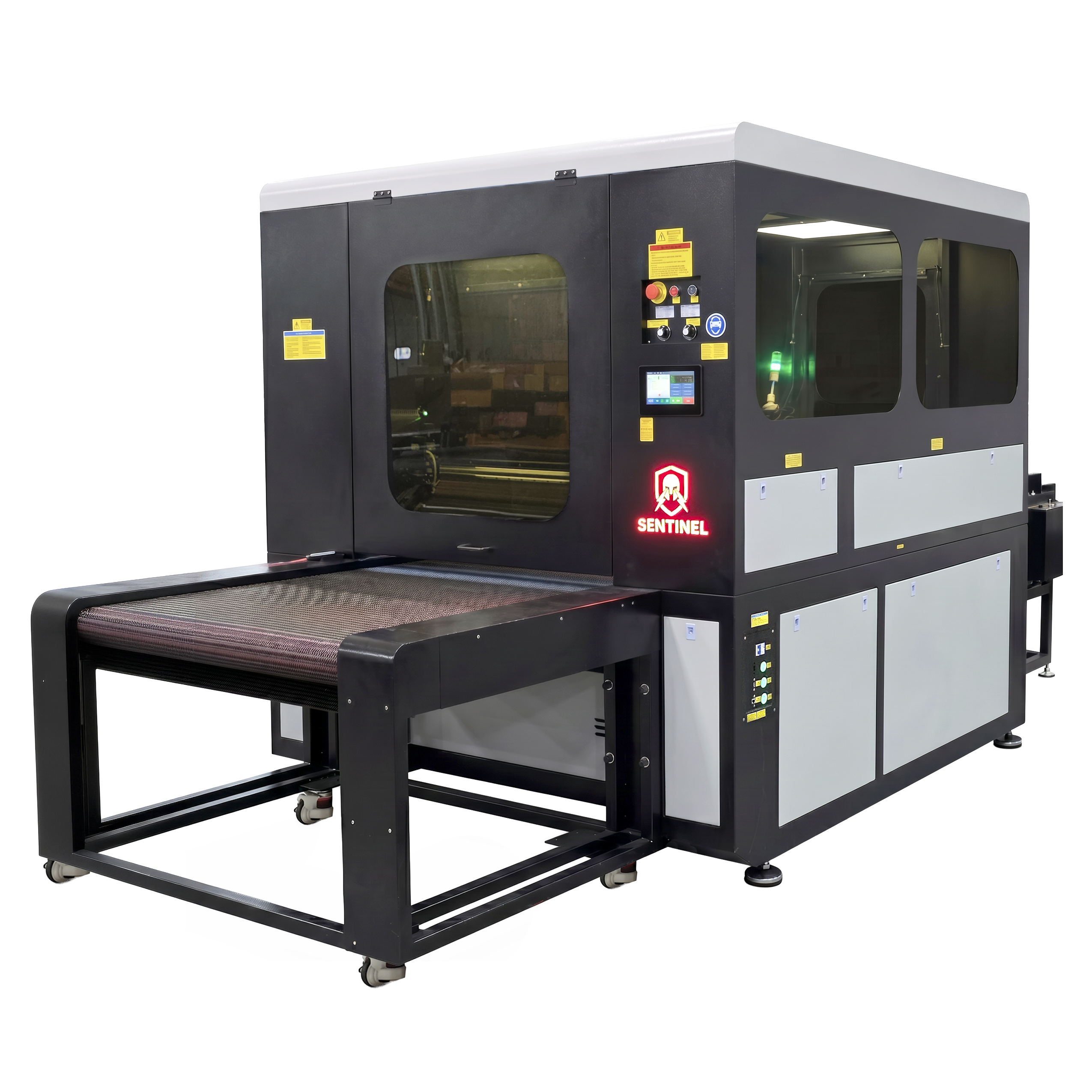
One of the biggest challenges in DTF production is cutting the finished gang sheets. Manual cutting with scissors simply cannot keep up with industrial print speeds. When evaluating a DTF ecosystem, consider how the software integrates with finishing equipment. For example, using software like Gangify alongside an automated vision-based laser cutter like The Sentinel eliminates the cutting bottleneck. The software automatically generates visual registration marks, allowing the laser to map and cut each design without the need for complex CAD or DXF files.
Even the best equipment requires setup, calibration, and regular maintenance. When purchasing a commercial DTF system, you are not just buying a machine; you are choosing a partner for your business.
Shipping a printer to your dock and sending a PDF manual is not enough for an industrial setup. Look for suppliers that offer turnkey packages and white-glove installation. Having a professional technician arrive on-site to build the machine, align the print heads, configure your RIP software, and train your staff is invaluable. Proper initial training prevents operator errors that cause ninety percent of hardware issues.
Equipment goes down; it is a reality of the printing business. What matters is how fast you can get back up and running. Ensure your supplier stocks replacement parts domestically. Access to local print heads, mainboards, capping stations, and wiper blades, combined with knowledgeable phone and video support, protects your production schedule and your profit margins.
Investing in a DTF system is a major decision for any apparel decorator. By focusing on print head configurations, robust ink management, matched curing speeds, precision hardware, and reliable support, you can select a printer that scales with your business. Prioritize features that remove bottlenecks and automate repetitive tasks, allowing you to spend less time troubleshooting and more time fulfilling orders.