Menu
Close
Direct-to-Film printing has completely changed the apparel decoration industry. It is fast, versatile, and scales easily to meet high-volume demands. Just like any manufacturing process, running a print shop means managing the physical materials you consume and the waste you leave behind. As your production volume increases, so does your footprint. A successful print shop selects its tools based on the needs of the business, and today, operating responsibly is a major part of that equation.
At American Print & Supply, we build partnerships and design workflows that help decorators reclaim their time, profit, and peace of mind. Part of that peace of mind comes from understanding the environmental impact considerations for DTF printing operations. By addressing how your shop handles ink, film, powder, and energy, you can run a cleaner, safer, and more efficient business.
Sustainability in a print shop is not just about being green; it is about reducing wasted materials, lowering overhead costs, and keeping your operators safe. When you minimize errors and control your consumables, your profit margins improve alongside your environmental footprint.
Your clients care about where their custom apparel comes from and how it is made. Wholesale buyers, corporate clients, and retail customers are increasingly asking about the inks and processes used on their garments. Being able to explain that your shop uses water-based inks and energy-efficient curing methods provides a distinct advantage when bidding on large fulfillment contracts.
Indoor air quality and proper waste disposal are heavily regulated for a reason. Adhering to safety standards protects your employees and your equipment. Airborne particles from adhesive powders and fumes from curing ovens can settle on your printer’s vital components, leading to premature wear and expensive downtime. Proper ventilation and filtration are necessary for both environmental compliance and the longevity of your machines.
To run a highly efficient print shop, you have to break down your workflow and look at the consumables you use every day. Each component of the DTF process presents an opportunity to make smarter, less wasteful choices.
Different inks are made for different jobs. Solvent inks, often used in large-format outdoor signage, emit strong odors due to volatile organic compounds (VOCs) and require specialized ventilation. By contrast, DTF ink is a highly specialized, aqueous-based pigment ink. Because it uses water as a carrier rather than harsh chemical solvents, it produces far fewer VOC emissions during the printing process.
Using premium DTF bulk inks allows for vibrant, long-lasting prints on a wide range of fabric types without the heavy environmental toll of solvent-based chemicals. Furthermore, managing your ink supply through bulk one-liter bottles rather than small, disposable cartridges significantly reduces the amount of single-use plastic your shop throws away.
DTF relies on printing designs onto a specialized film and transferring them onto fabrics using heat and pressure. The carrier film is typically made of polyethylene terephthalate (PET). While PET is technically a recyclable plastic, the chemical coating on the film can complicate the recycling process in local municipal facilities.
The most effective way to handle film waste is through strict material optimization. By using intelligent gang sheet building software, like Gangify, operators can pack designs tightly onto a single roll, minimizing the empty space that eventually becomes waste. Utilizing high-quality, double-sided coated options like our Super Peel Film ensures accurate ink adherence and consistent peeling, which prevents misprints. Fewer misprints mean fewer garments and less film end up in the trash.
After the ink is laid down on the film, a TPU adhesive powder is applied and melted to form the bonding layer. The heating process releases fumes and micro-particles into the air. Managing this step is critical for both the environment and operator safety.
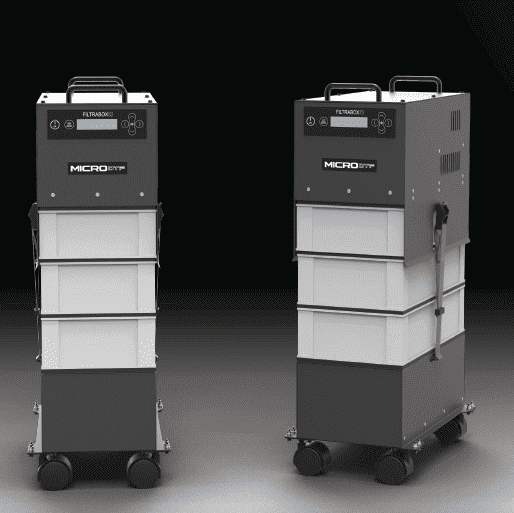
Commercial shops must use dedicated fume extraction systems. We integrate units like the Filtrabox Micro DTF Fume Extractor and advanced 250W Industrial Filtration systems with our high-speed setups. These systems use a combination of HEPA paper filters and activated carbon filters to trap particulates and neutralize odors before the air is recirculated into your workspace. Regularly replacing your filter elements keeps your shop’s air clean and prevents external environmental contamination.
High-capacity production requires serious power. As your shop upgrades to multi-head printers and large curing ovens, monitoring your electricity usage becomes a practical necessity.
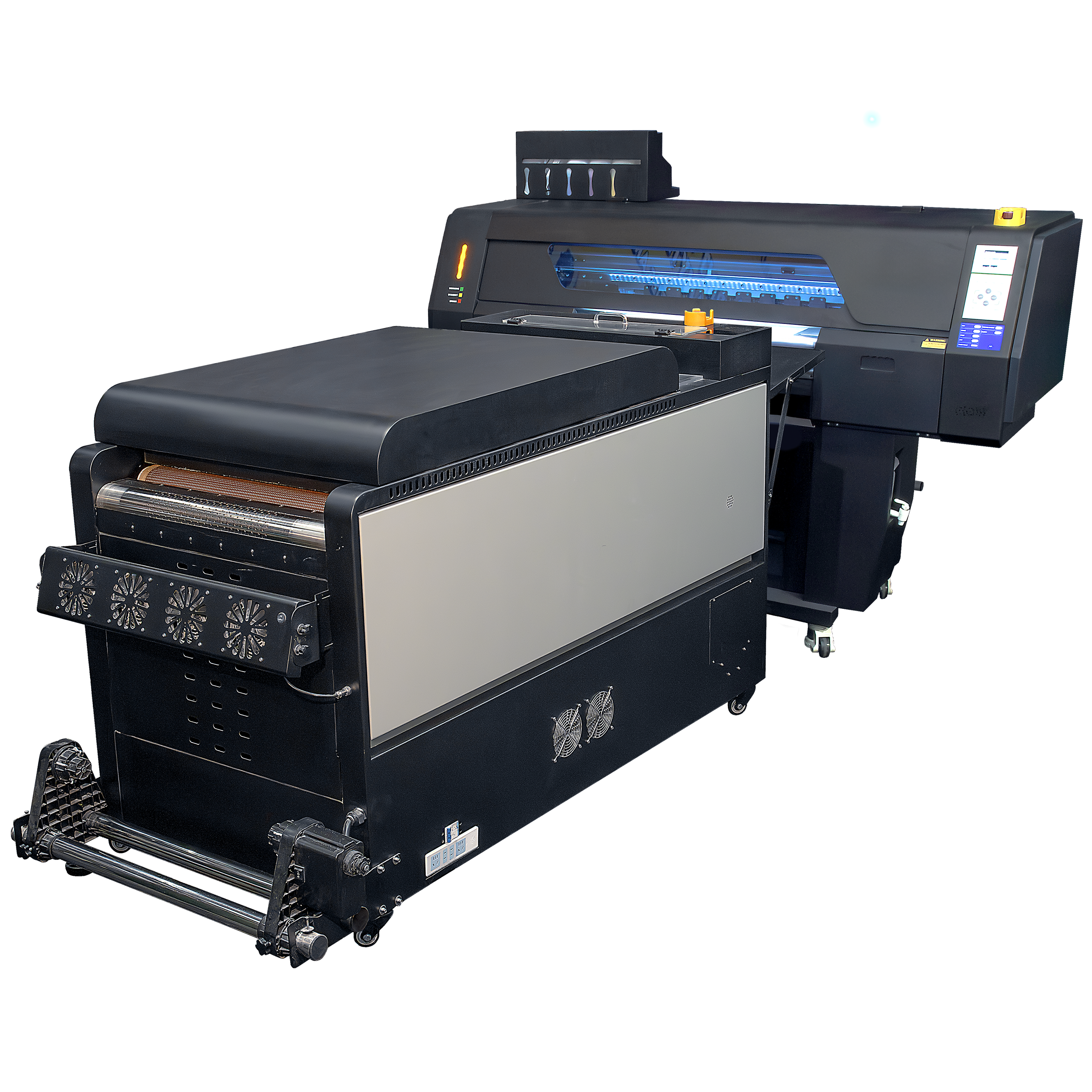
The curing oven is typically the most power-hungry piece of equipment in a DTF workflow. Our APAS Smart Dusters, paired with flagship printers like The Kraken and The Hydra, utilize advanced tungsten wire bulbs and dual-oven designs to match the speed of the printer with consistent, efficient curing. By properly managing your heat settings and using machines with reliable solid-state relays and insulated heating chambers, you prevent heat loss. This means the machine draws less sustained power to maintain its optimal temperature, reducing your overall energy footprint.
If your printer outputs 650 square feet an hour, you cannot afford to have operators cutting transfers with scissors. Manual cutting is slow, prone to human error, and often results in ruined transfers that must be reprinted—doubling your material waste for a single job.
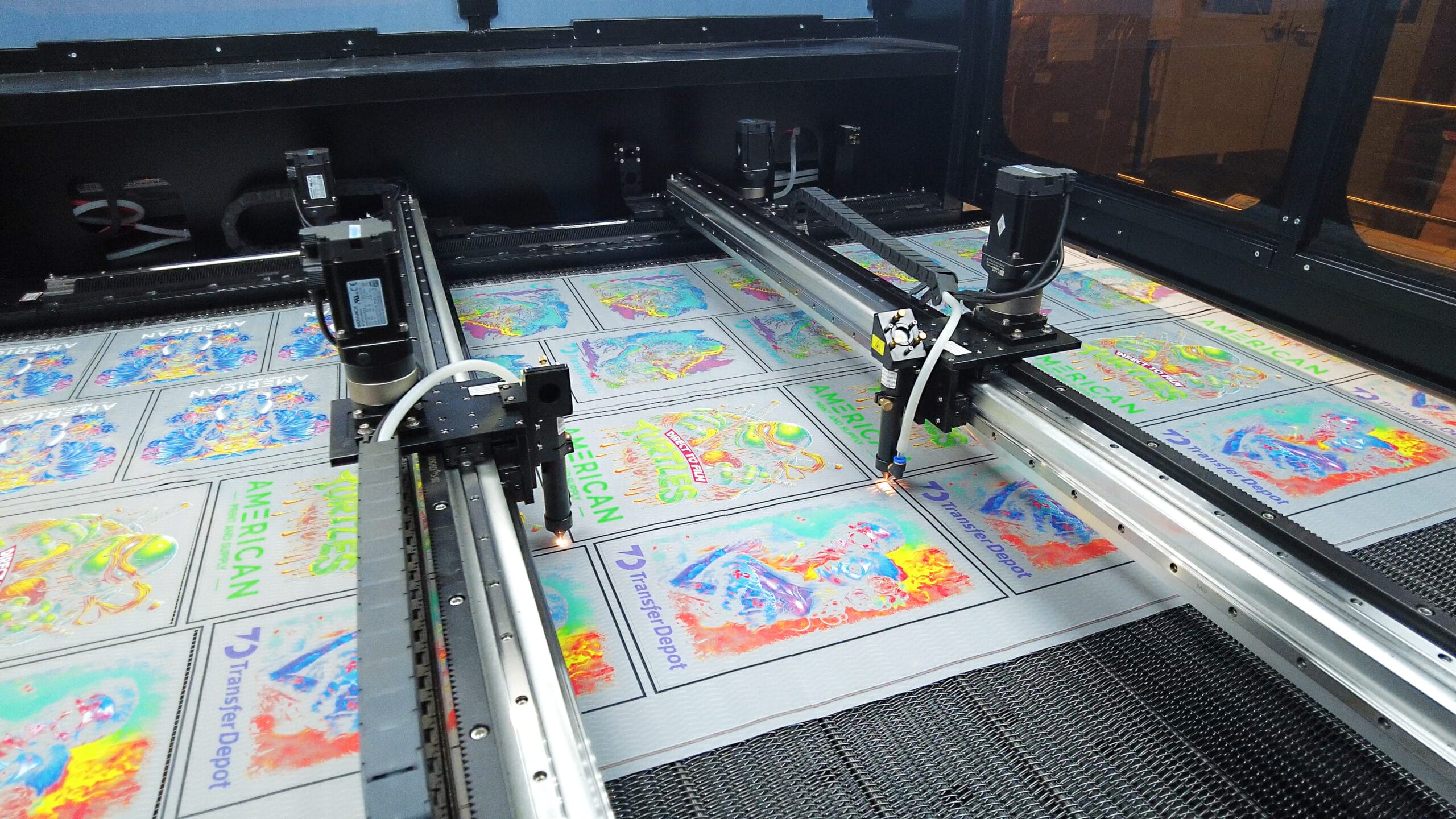
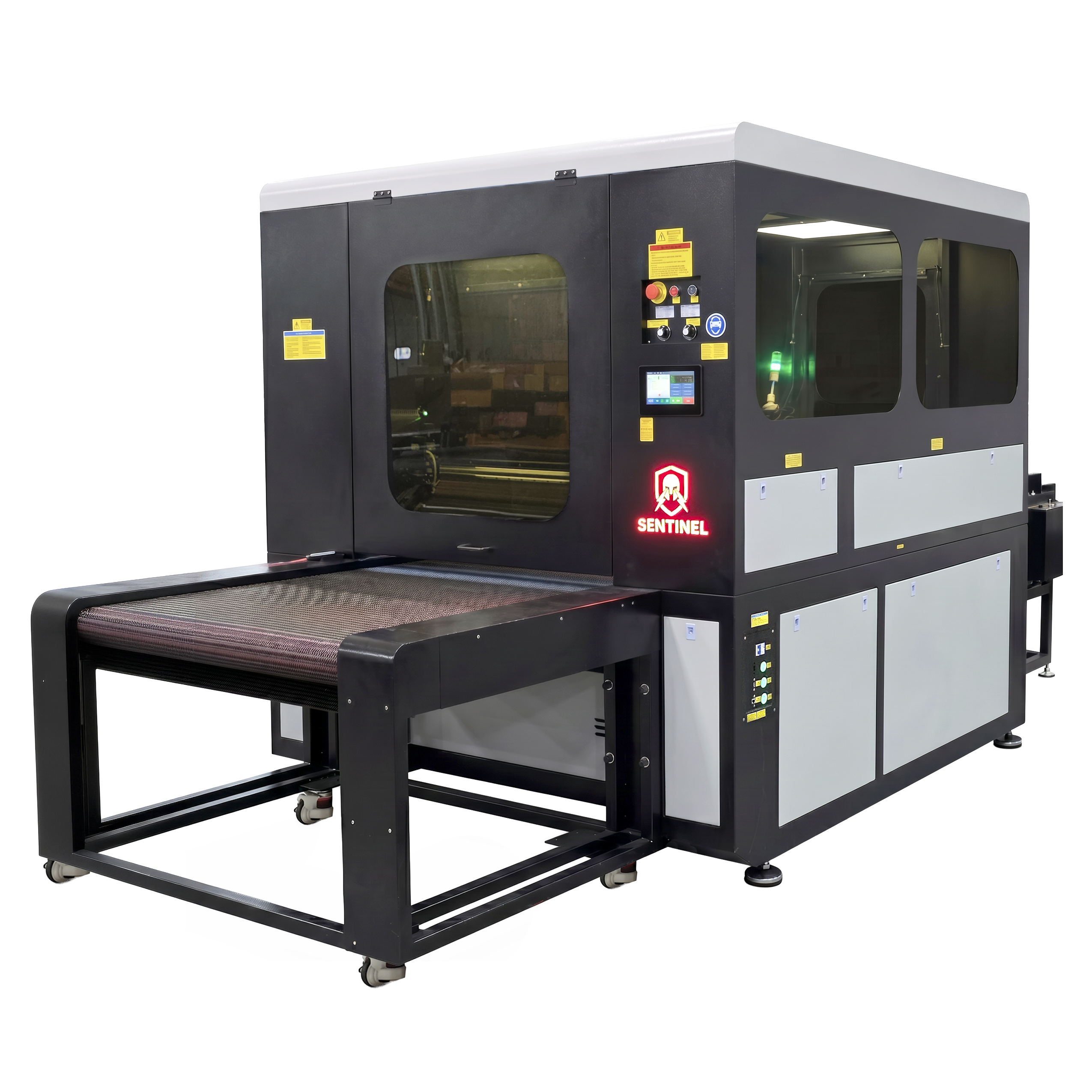
In late 2025, we introduced The Sentinel, a vision-based laser cutting system engineered to eliminate this exact bottleneck. By using an overhead camera to scan printed rolls in real time, The Sentinel maps each cut path automatically without requiring complex CAD or DXF overlay files. It cuts with absolute precision, meaning zero ruined transfers. Furthermore, its continuous end-to-end production loop ensures that you only use the power and time absolutely necessary to finish the job.
Building a successful print business requires thinking long-term about your equipment and your processes.
One of the largest environmental impacts a shop can have comes from e-waste. Buying cheap, entry-level desktop conversions often leads to broken machines that are discarded after a few months of heavy use. True commercial-grade machines, from the compact Son of a Gladiator to the 8-head Kraken, are built with heavy-duty servo motors, industrial Epson I3200 print heads, and robust mainboards.
Investing in durable machinery extends the lifespan of your production line. When a component does wear out, we supply specific OEM replacement parts—like capping stations, dampers, and ink manifolds—so you can repair the machine rather than replacing the entire unit.
Understanding the environmental impact considerations for DTF printing operations is ultimately about working smarter. By choosing water-based pigment inks, optimizing your gang sheets to save PET film, running activated carbon fume extractors, and using precise automation tools like The Sentinel, you build a workflow that respects your bottom line and your environment.
At American Print & Supply, we deliver the systems, the premium consumables, and the white-glove training necessary to help your business scale with confidence. Operating a clean, highly efficient print shop is entirely within your reach, and we have the tools to help you get there.