Menu
Close
Direct-to-film printing has fundamentally shifted how apparel decorators operate. The technology allows print shops to produce vibrant, durable transfers that apply to nearly any fabric without the need for pre-treatment. As your business grows, selecting the right machinery becomes a critical decision. A complete system represents a major financial commitment, making a thorough comparison of DTF equipment prices and features necessary to ensure you invest in a machine that matches your production needs and budget.
Whether you run a small custom apparel shop or a high-volume fulfillment center, understanding the differences between entry-level printers and industrial powerhouses will help you make an informed choice. Here is a breakdown of what you can expect across different pricing tiers and the specific features you should evaluate.
Printer prices generally scale based on print width, the number of printheads, and the level of automation included in the duster and curing oven. It is helpful to group these systems into three main categories.
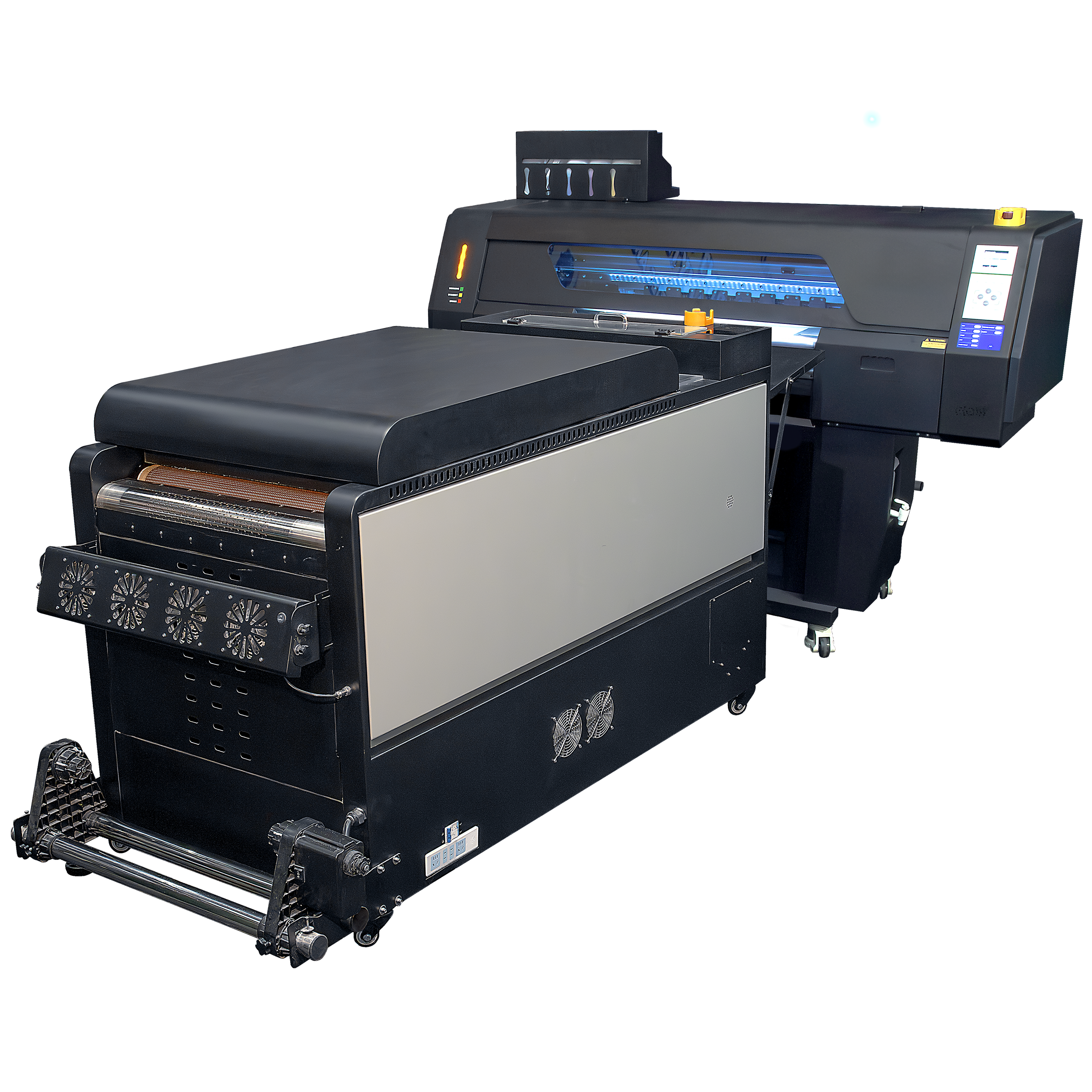
For shops transitioning into direct-to-film or adding it as a supplementary service, compact setups like the 24-inch UFO Plug n Play or the Artemis 2-Head printer offer a sensible starting point. These machines typically feature two Epson i3200 printheads—one dedicated to CMYK colors and the other to white ink.
At this price tier, which generally sits at the lower end of commercial investments, you get reliable output suitable for short to medium runs. The feature set usually includes a standard smart duster and a compact footprint. These systems are cost-effective but will max out in speed compared to larger models, making them ideal for businesses producing a few hundred transfers a day rather than thousands.
When a shop outgrows a two-head system, mid-volume machines bridge the gap between basic production and industrial output. Printers like the Hydra feature a 6-head configuration, providing a massive jump in printing speed and color capability.
Priced in the mid-range of commercial equipment, these printers offer features like extended color gamuts (often including fluorescent or RGB channels alongside standard CMYK) and dual-roll capacities. They also include upgraded filtration systems and more robust, extended ovens to ensure the powder cures thoroughly even at higher print speeds. This tier is built for growing businesses that need to handle consistent, daily volume without constant operator intervention.
At the top of the pricing spectrum are industrial machines built for serious scale. The Kraken, an 8-head DTF powerhouse, represents this tier. Printing at over 650 square feet per hour, machines in this category are designed to replace multiple smaller printers.
The premium price tag includes advanced features like dual rail magnetic drive systems that eliminate belt drag, increasing both speed and mechanical stability. These systems support up to 13 color combinations, dual white channels, and feature extended smart dusters with dual ovens. When you invest in an industrial system, you are paying for the ability to process massive wholesale transfer orders or run a high-capacity fulfillment operation seamlessly.
When comparing prices, it is important to look under the hood. Two printers that look similar on the outside can have drastically different capabilities and price points based on their internal components.
The printhead is the engine of your DTF machine. Genuine Epson i3200 printheads are the industry standard for commercial equipment. A machine with two heads is less expensive, but a machine with six or eight heads will drastically reduce your print times. More heads also allow for advanced ink configurations. If your clients demand spot-on brand colors or extended gamuts, paying a premium for a machine that supports additional color channels is a functional requirement.
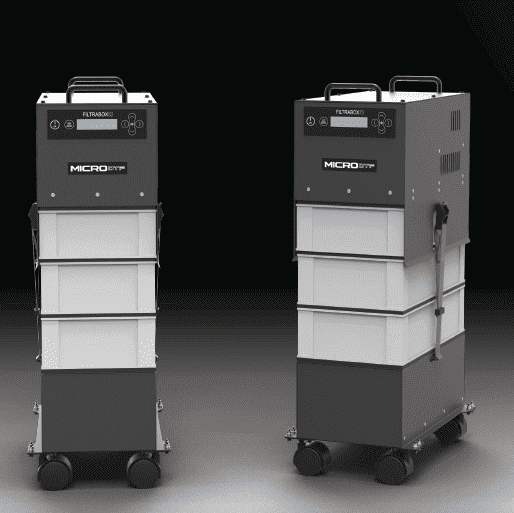
A fast printer is useless if the curing oven cannot keep up. Entry-level machines feature shorter curing zones. High-end machines feature extended, multi-zone ovens and automated powder recirculation systems. If a printer outputs high volumes, the oven must be long enough to properly melt the premium adhesive powder before the film reaches the take-up reel. This prevents the bottleneck of slowing down print speeds just to let the oven catch up.
Software is a feature that often gets overlooked in hardware comparisons. Advanced RIP software like Digital Factory V12 Direct to Film Edition or NeoStampa Delta maximizes the efficiency of your printer. Premium software allows for automated nesting, precise white-ink underbasing, and custom color profiling. High-end equipment packages usually include these advanced software licenses, which adds to the initial price but saves countless hours in prepress workflow.
Your workflow does not end when the film rolls off the printer. If your machine outputs hundreds of feet of film per hour, manually cutting those transfers becomes a severe bottleneck.
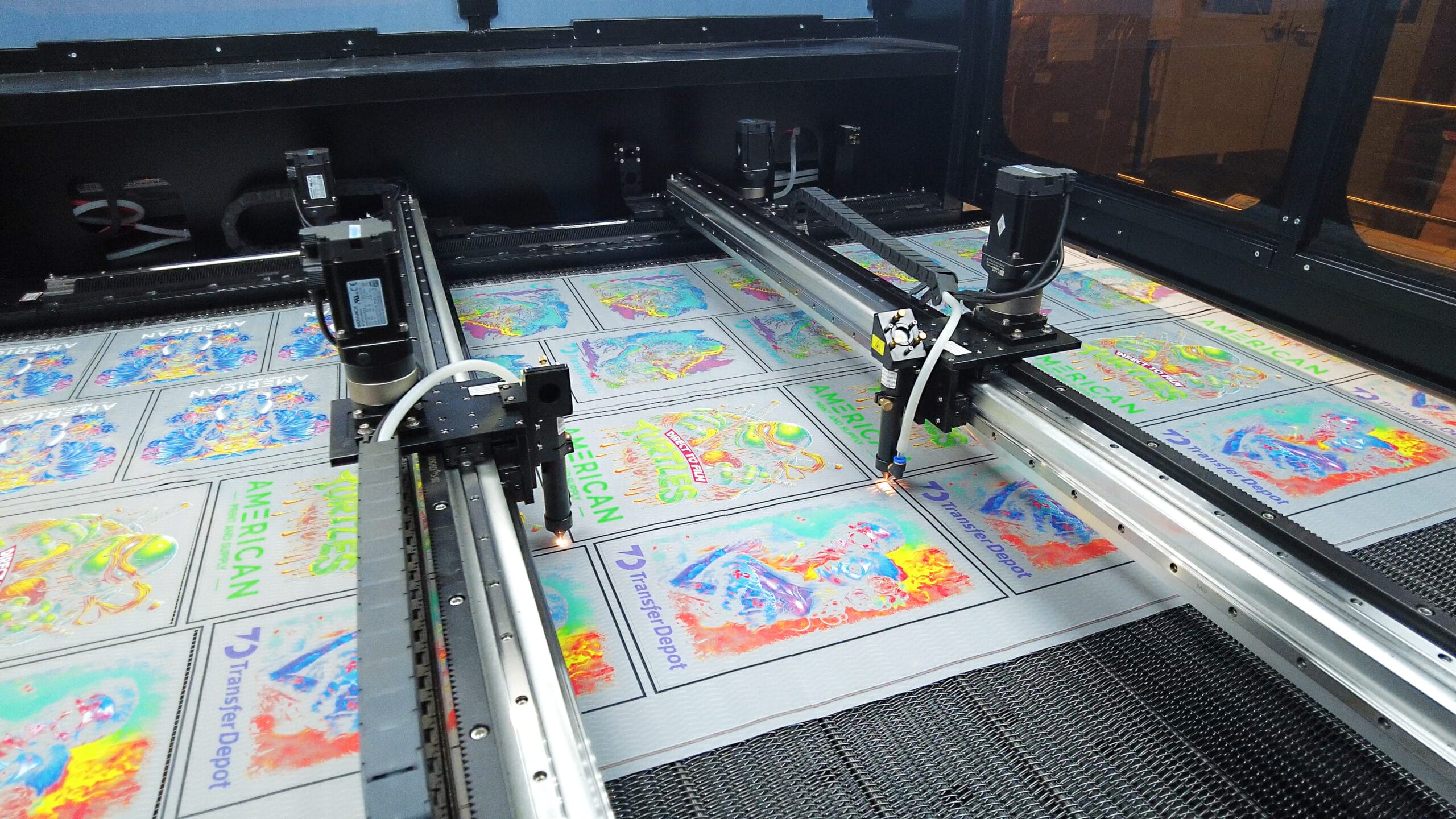
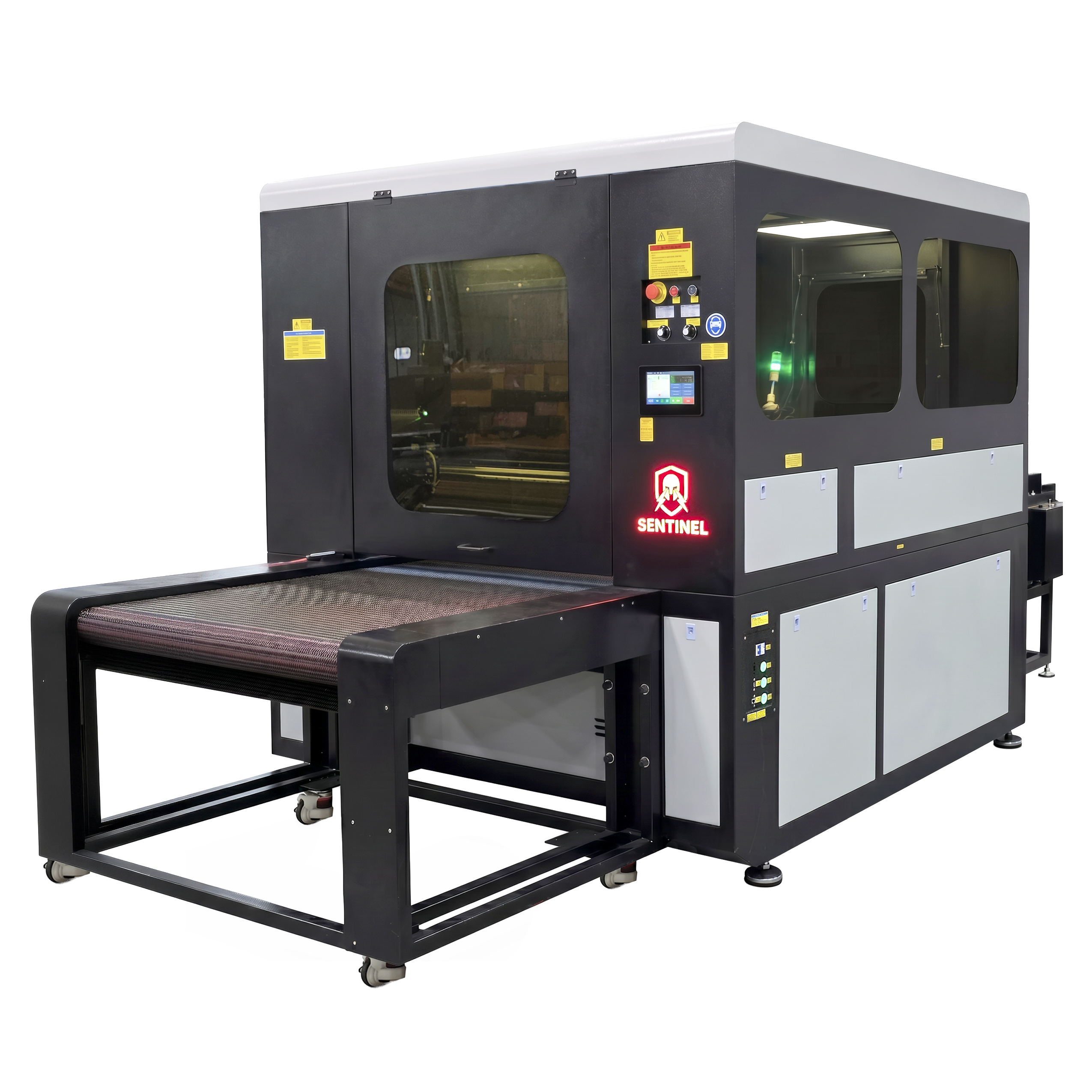
Equipment like The Sentinel automated vision laser cutter changes the calculation for high-volume shops. Instead of relying on manual labor and scissors, vision-based cutters scan the printed rolls in real-time and map cut paths automatically without the need for complex CAD files. With dual servo-driven lasers and a built-in exit conveyor, an automated cutter can process up to 750 transfers an hour. When budgeting for high-end DTF production, factoring in the cost of automated finishing equipment is a practical step toward true operational efficiency.
The sticker price of a DTF printer is only the beginning. When comparing equipment, you must consider the ongoing costs of operation, maintenance, and the level of support provided by the manufacturer.
High-quality consumables keep your machine running smoothly. Factor in the cost of Super Peel double-sided film, premium bulk inks, and standard maintenance parts like capping stations, dampers, and wiper blades. Cheaper printers often require more frequent parts replacements, which drives up your long-term operating costs and causes unexpected downtime.
The most important feature of any commercial printing system is the support behind it. Buying a budget printer from an overseas vendor might save money upfront, but it often leaves you entirely on your own for installation, troubleshooting, and repairs.
American Print & Supply packages our advanced systems with white-glove workflow support. This means on-site installation, comprehensive operator training, and reliable customer service. We make sure the system is configured correctly for your shop environment and your specific production goals. When you experience an issue, having a partner who understands the technology and provides immediate support minimizes downtime and protects your profitability.
Comparing DTF equipment requires matching your current business volume with your goals for the future. Whether you choose a compact plug-and-play system or a massive 8-head production line, focusing on build quality, software integration, and reliable vendor support will ensure your equipment serves as a foundation for sustainable growth.