Menu
Close
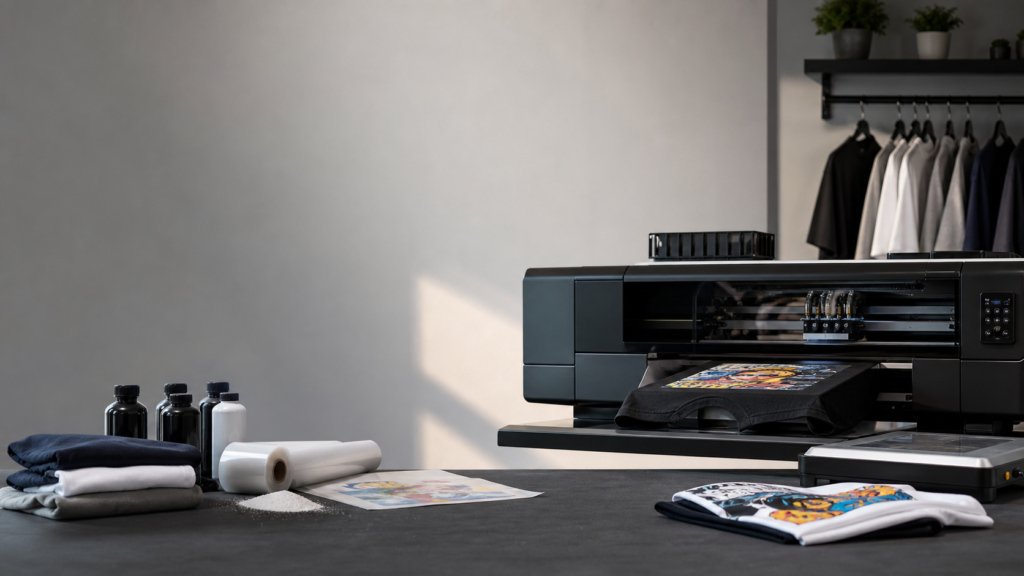
Direct to film printing has completely changed how custom apparel is made. It is fast, works on almost any fabric, and does not require the messy pre-treatment steps of older methods. But as your print shop grows, picking the right machinery becomes a major decision. Knowing the differences between popular DTF equipment models is the best way to make sure you invest in a system that fits your current needs and supports your future growth.
At American Print & Supply, we have spent years perfecting the printing and pressing process. We know that a machine is only as good as the support and workflow behind it. Whether you are running a small garage setup or a massive warehouse producing thousands of shirts a day, understanding what separates these machines will help you reclaim your time and increase your profits.
Before looking at specific machines, you have to look at your own shop. The right printer for you depends entirely on what you need it to do. If you buy a massive industrial printer for a small volume of orders, you are wasting money and floor space. If you buy a small, entry-level printer for a high-volume shop, your team will be waiting around for prints to finish, creating a massive bottleneck.
Think of a DTF printer like a vehicle. A compact car is great for quick, everyday errands, but you would not use it to haul heavy construction materials. You need a large truck for that. In the printing world, the differences between popular DTF equipment models come down to print heads, speed, footprint, and color capabilities.
For decorators who are moving away from weeding vinyl or outsourcing their transfers, an entry-level to mid-volume machine is the perfect starting point. These machines are designed to be simple to use while taking up minimal space in your workspace.
Models like the Artemis 2-Head DTF Printer and the UFO Plug and Play 24-inch system are built for simplicity. They usually feature two print heads: one for laying down the bright color layer, and one for applying the white ink base that allows the design to show up on dark garments. These machines handle a 24-inch width, which is the industry standard for most standard gang sheets.
These printers are highly reliable and produce the exact same quality as larger machines, just at a slower pace. They are perfect for shops that want to bring production in-house to save money on outsourced transfers but do not yet have the order volume to justify a massive industrial setup.
When floor space is tight but you need commercial-duty output, compact models like the Son of a Gladiator 17-inch system bridge the gap. It offers a smaller footprint but is built with industrial parts, making it a rugged, dependable option for consistent daily printing without taking over your entire shop floor.
When your shop is printing hundreds of gang sheets a day, a two-head printer simply cannot keep up. High-volume models are built entirely around speed, stability, and advanced color accuracy. The differences between popular DTF equipment models at this level mostly involve the number of print heads and the way the machines cure the film.
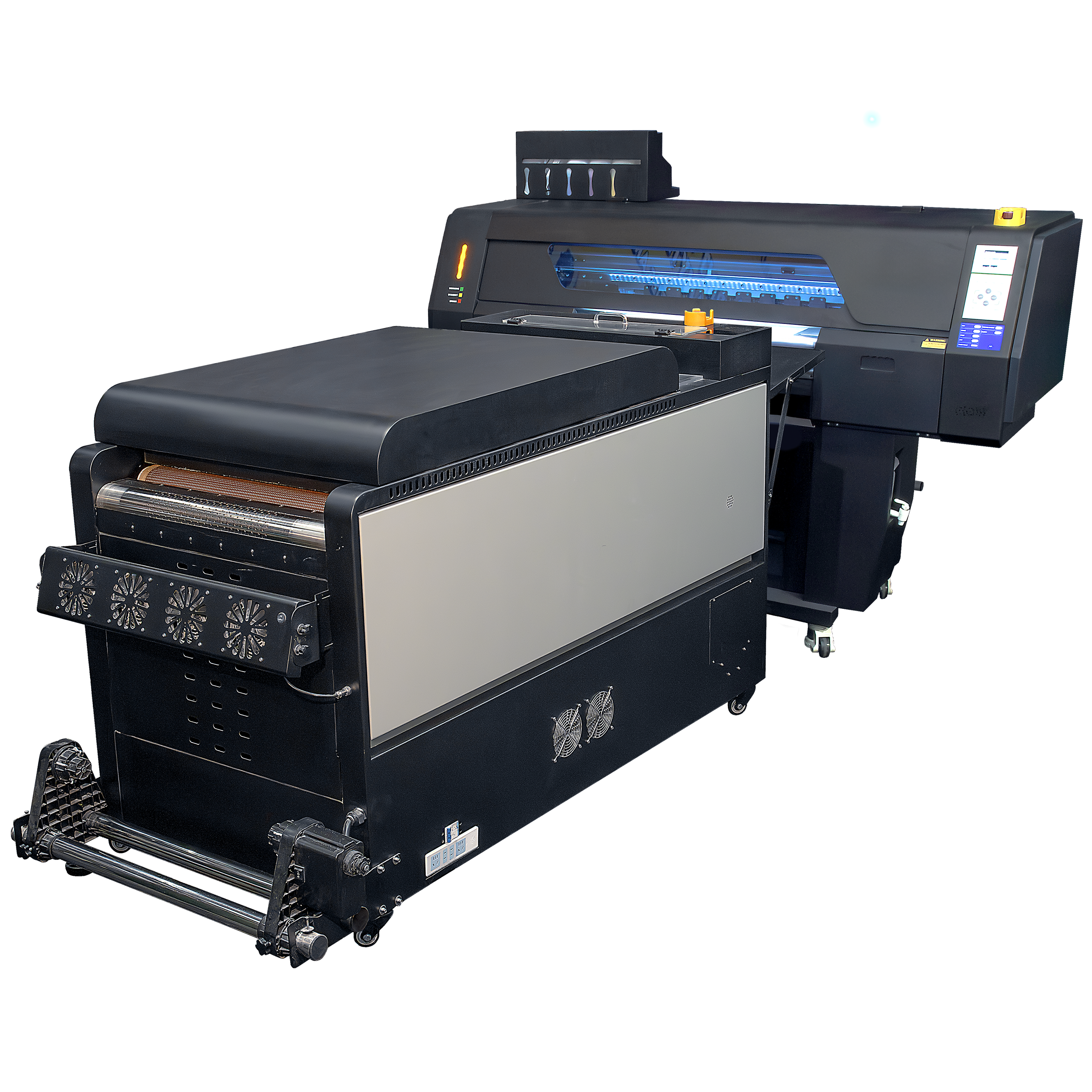
For serious volume, the Hydra is a massive step up. Moving from two heads to six heads means the printer can lay down ink much faster without losing resolution. To handle this speed, the mechanics of the machine have to be stronger. High-volume printers use upgraded drive systems to move the print carriage back and forth quickly and smoothly. They also feature larger dusters and longer heating ovens to ensure the adhesive powder melts perfectly, even when the film is moving rapidly through the machine.
At the top of the production chain sits The Kraken. This machine features 8 Epson I3200 print heads and prints at over 650 square feet per hour. To explain that simply: it prints faster than a single person can load, press, and fold the finished shirts.
The Kraken also highlights another major difference in top-tier models: color combinations. While standard printers use CMYK and White ink, The Kraken supports up to 13 color combinations, including RGBO (Red, Green, Blue, Orange) and SuperBlue+ channels. This expanded color gamut allows decorators to hit highly specific brand colors and neon-like vibrancies that standard four-color printers cannot match. A machine this fast also features a dual oven design. If the printer puts out film rapidly, the oven needs to be long and hot enough to cure the powder before the film reaches the take-up reel.
Printing the film is only the first half of the process. Once you have a 300-foot roll of printed graphics, someone has to cut them out. As printers get faster, cutting becomes the most obvious bottleneck in the entire shop. A printer like the Kraken outputs transfers so fast that no human with a pair of scissors could ever keep up.
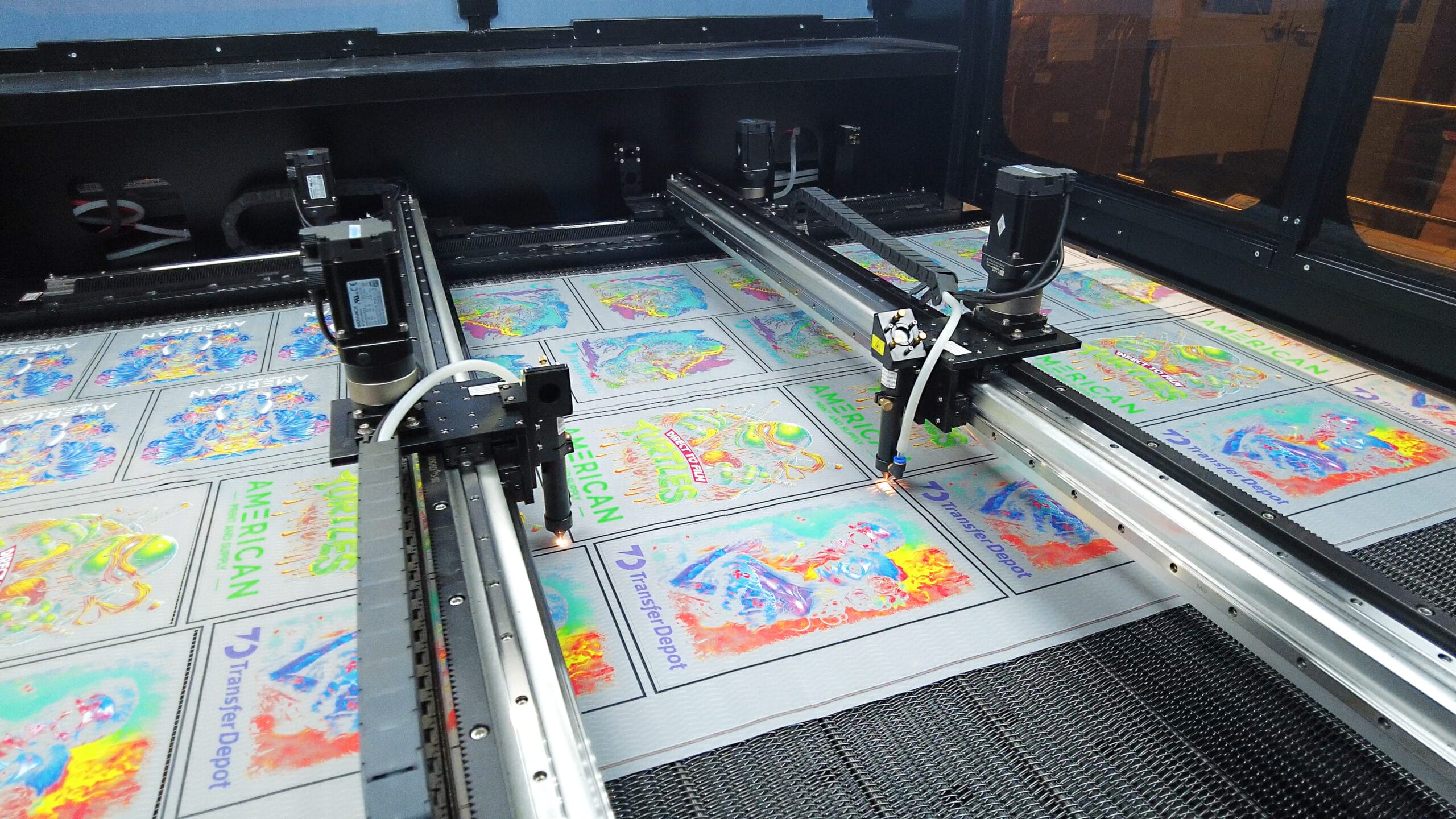
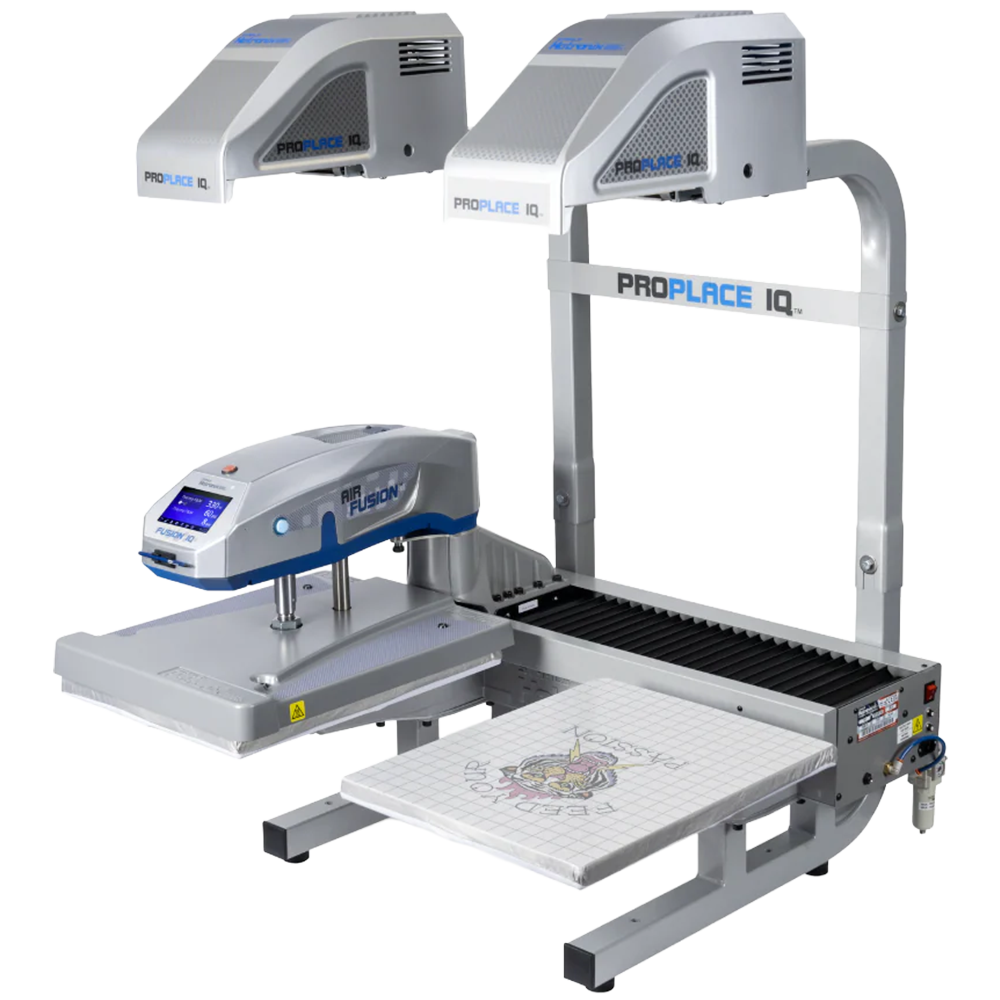
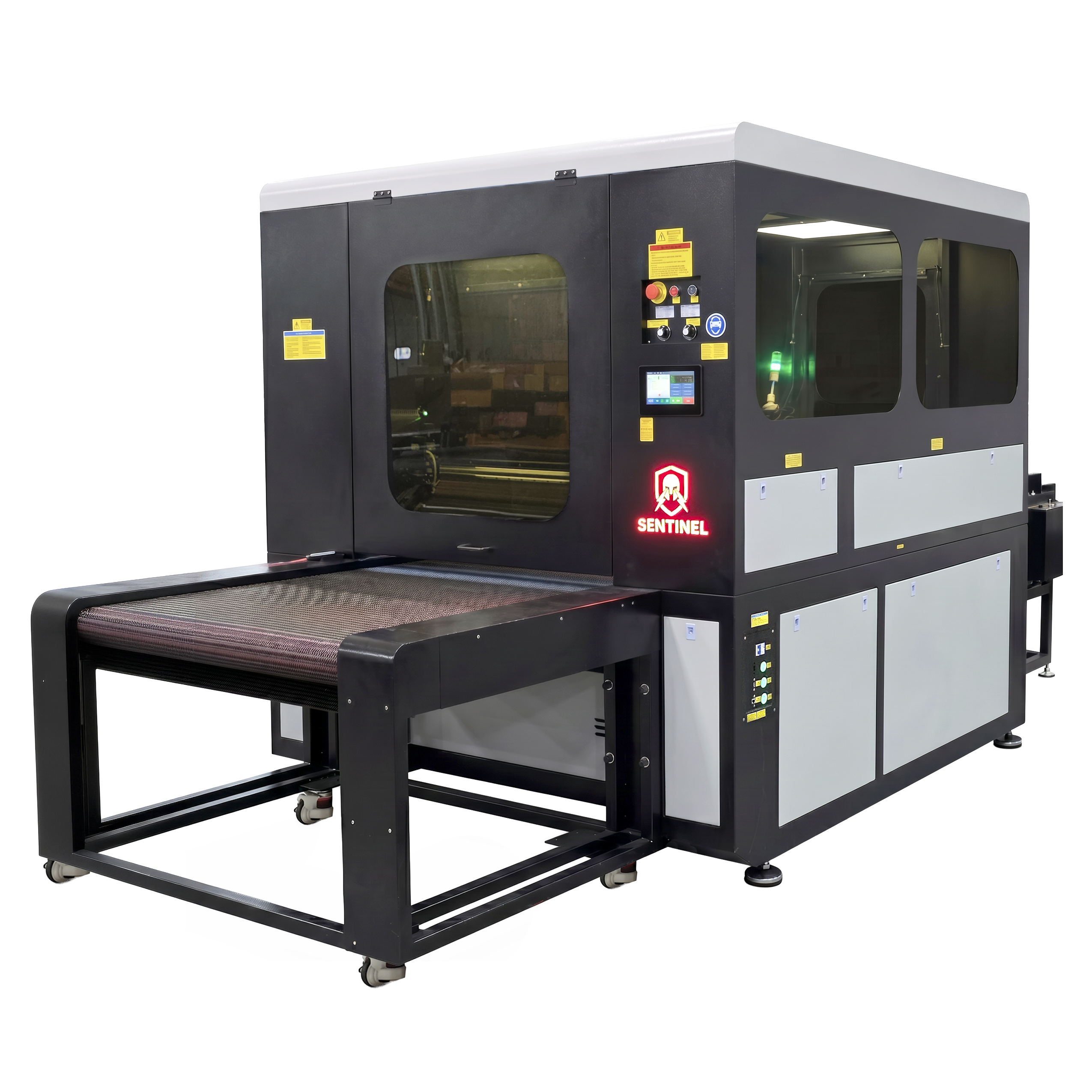
This is where finishing equipment comes into the conversation. The Sentinel is a vision-based laser cutter built specifically to handle DTF transfers. Instead of relying on complex overlay files that can easily get messed up, the Sentinel uses an overhead camera to scan the printed rolls in real time. It reads the gang sheet, maps the cut lines automatically, and cuts the film using dual servo-driven lasers.
It can handle two 32-inch rolls at the exact same time, cutting a new transfer every three seconds. It even features an integrated exit conveyor, meaning the machine just keeps running while your team gathers the cut transfers and heads straight to the heat press. Integrating equipment like the Sentinel is how a shop transitions from just printing fast to actually operating efficiently.
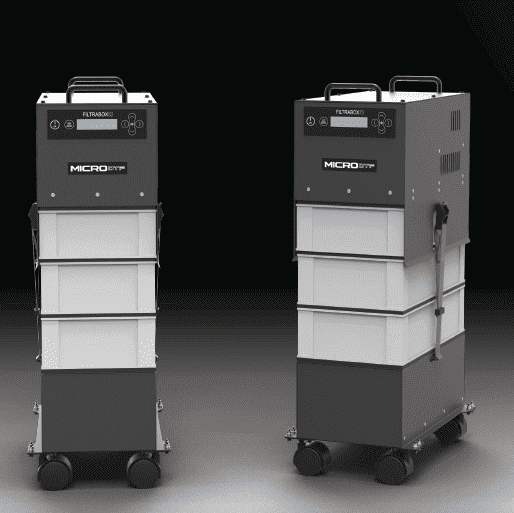
Another major factor when comparing equipment is how they handle the environmental aspects of DTF printing. Melting adhesive powder creates fumes and oil buildup. Smaller setups might get away with basic ventilation, but commercial machines require heavy-duty air purification. Units like the DTF 250W Industrial Filtration Fume Extractor are designed specifically to pull these fumes away from the machine, filtering the air through heavy activated carbon filters before releasing it back into the room. Better filtration keeps your shop clean, keeps your employees safe, and prevents oil from settling back onto your expensive print heads.
Choosing the right printer is important, but a machine is just a tool. The biggest difference between a successful print shop and a struggling one is the support system behind the equipment. When a machine goes down, production stops. This is why we focus heavily on white-glove workflow support.
Buying a commercial printer should mean you receive commercial-level service. A true turnkey package means the equipment arrives with everything needed to start working immediately. This includes the laptop, the RIP software like Digital Factory Direct to Film Edition, the film, the exact ink configuration you need, and most importantly, on-site installation and training.
Having a professional set up the machine, align the print heads, and teach your staff how to properly clean and maintain the equipment prevents the most common issues from ever happening. If you run into a clog, knowing how to use products like PrintHeadRevive or when to replace a damper can save you thousands of dollars and days of downtime.
The differences between popular DTF equipment models are clear when you look at the mechanics. Entry-level printers are small, steady, and simple. High-volume systems are large, incredibly fast, and capable of complex color matching. Automated finishing equipment removes the human bottleneck of manual cutting.
A successful print shop selects its tools based strictly on the needs of the business. By understanding your daily order volume, your floor space, and your workflow, you can choose a system that builds a continuous, highly profitable production loop. Combine the right hardware with a solid partner for training and support, and you will have a foundation that can handle anything your customers demand.