Menu
Close
Printing on dark fabrics presents a specific set of challenges for apparel decorators. When working with black, navy, or deep-colored garments, standard printing methods often fall short, resulting in muted colors, poor opacity, or prints that crack over time. Direct to Film (DTF) printing solves these issues, provided you use the right combination of printers, software, and consumables. If your shop handles high volumes of dark apparel, understanding what DTF equipment is best for printing on dark fabrics is essential for delivering vibrant, retail-ready garments efficiently.
The primary hurdle when printing on dark textiles is the absolute need for a bright, highly opaque white underbase. Without a solid foundation of white ink, the dark color of the garment absorbs the CMYK inks, muddying the final image and eliminating any color accuracy. Laying down a heavy, consistent white layer requires a printer equipped with dedicated white print channels, advanced ink circulation systems, and precise alignment.
Inadequate equipment often struggles with white ink because titanium dioxide—the heavy pigment used in white ink—is prone to settling. When white ink settles, it leads to clogged printheads, inconsistent coverage, and costly downtime. Your equipment must feature constant circulation and agitation to keep the white ink suspended, filtered, and ready to fire evenly across the film.
To achieve maximum opacity and a wide color gamut on dark garments, you need machines built for continuous, industrial output. Desktop conversions simply cannot handle the volume of white ink required to cover dark fabrics effectively at scale.
For shops scaling their production, The Kraken represents the peak of DTF capabilities. Outfitted with eight Epson I3200 printheads, this system dedicates robust channels specifically to laying down the thick white underbase needed for dark fabrics. It supports extended color configurations like CMYK + RGBO and dual white channels. This ensures the printer easily hits vibrant reds, greens, and oranges that pop against black backgrounds, all while maintaining print speeds exceeding 650 square feet per hour.
For operations with slightly lower volume demands but the same high-quality standards, systems like The Hydra and the Artemis 2-Head DTF Printer deliver exceptional results. These units feature integrated white ink circulation and stirring mechanisms directly connected to the ink tanks. This ensures the white ink remains perfectly mixed to lay down a solid base without clogging the dampers or printheads.
Equipment hardware is only half the equation; the software driving it dictates exactly how the ink behaves on dark fabrics. When printing on black shirts, a standard feature you want to utilize is “knockout black.” The software automatically detects pure black areas in the design and removes them, allowing the shirt’s natural color to show through instead of printing black ink over a white base. This results in a softer hand feel and drastically reduces ink consumption.
RIP software like Digital Factory Direct to Film Edition v12 is critical for dark apparel. It gives operators granular control over choke and spread settings. Choking the white underbase pulls it slightly inward from the edge of the color layer. This guarantees that no white borders peek out from behind your colored graphics when pressed onto a dark shirt, maintaining sharp, professional edges.
The physical components you apply to the garment matter just as much as the hardware. Using subpar ink, film, or powder will compromise your final product, regardless of how advanced your printer is.
Not all white inks are manufactured to the same standard. DTF Premium V2 Bulk White Ink is formulated to provide maximum coverage with minimal thickness. Thinner ink layers that maintain high opacity result in transfers that stretch naturally with the fabric and withstand dozens of wash cycles without cracking or peeling.
When pressing on dark fabrics, you need clean release and high transfer rates. Super Peel Film features a specialized double-sided coating that holds heavy ink loads without pooling or running. Its instant peel capability drastically reduces production time at the heat press, allowing operators to peel hot and move immediately to the next garment.
The adhesive powder bonds the ink to the fabric and blocks dye migration. When pressing on dark polyester or poly-blends, the dye from the shirt turns into a gas when heated, which can bleed into your white ink and turn it gray or pink. Applying a high-quality Premium Adhesive Powder acts as a barrier, keeping your whites bright and your colors accurate across all fabric types.
Laying down a heavy white base requires dedicated, consistent curing. If the adhesive powder is not melted evenly, the transfer will fail to adhere to the dark garment properly, leading to wash-out issues.
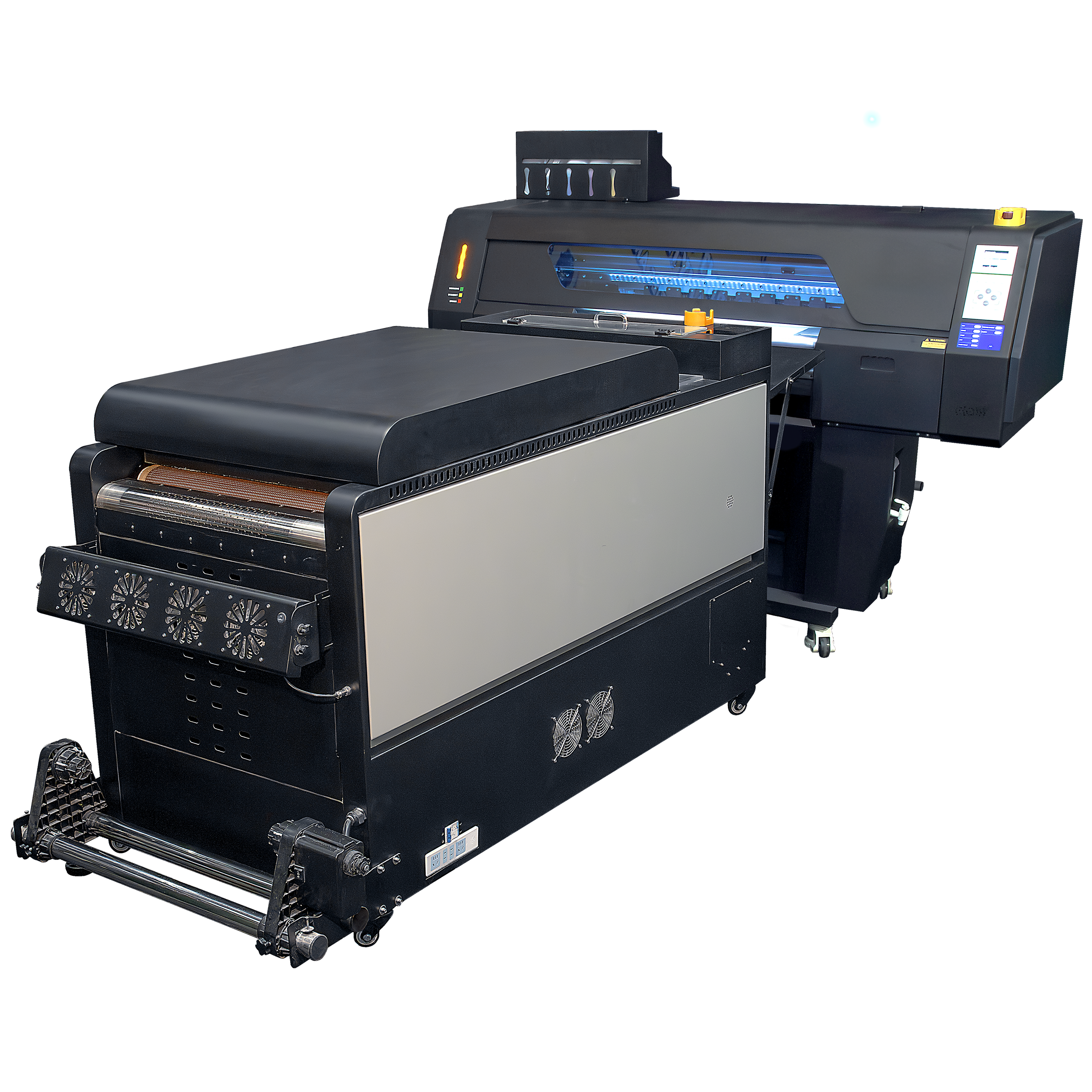
Printers outputting high volumes of ink require dusters that can keep up. Because dark garment transfers require more white ink, they take slightly longer to dry. Using a matched system, like the extended smart dusters paired with our commercial printers, ensures the heavy ink and powder layer cures completely at high speeds. These dusters feature multi-stage heating zones to melt the powder evenly without scorching the film or slowing down the print queue.
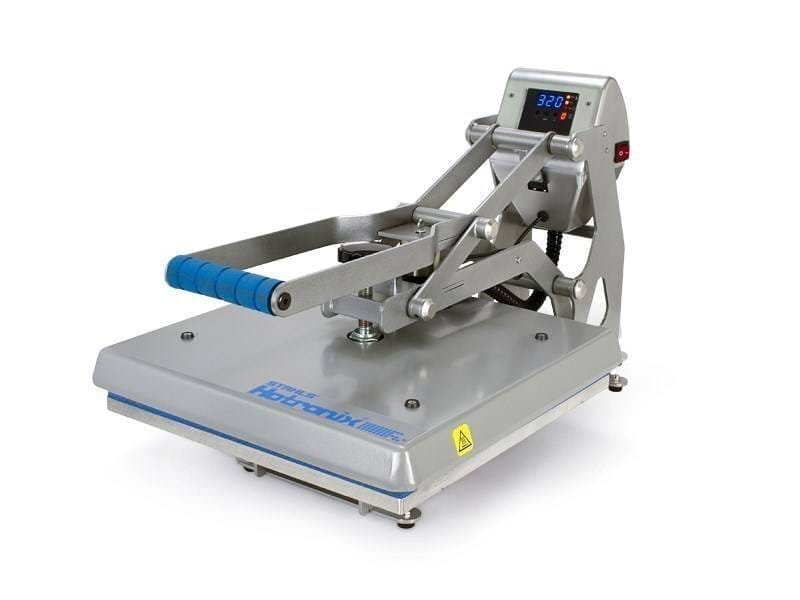
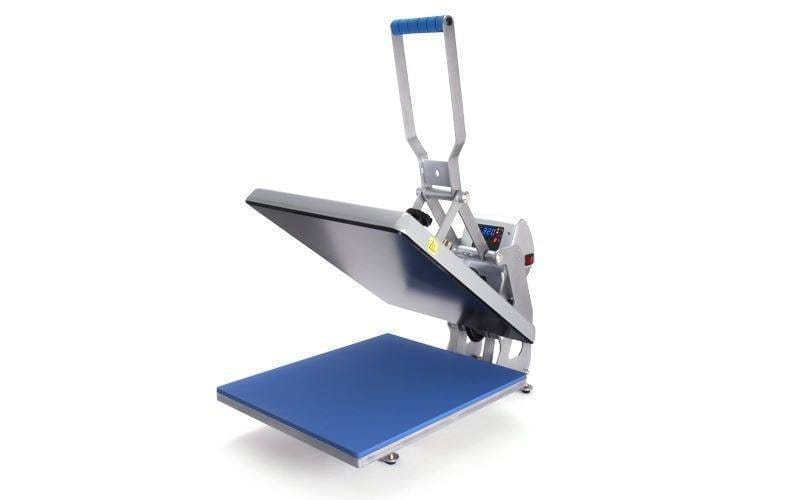
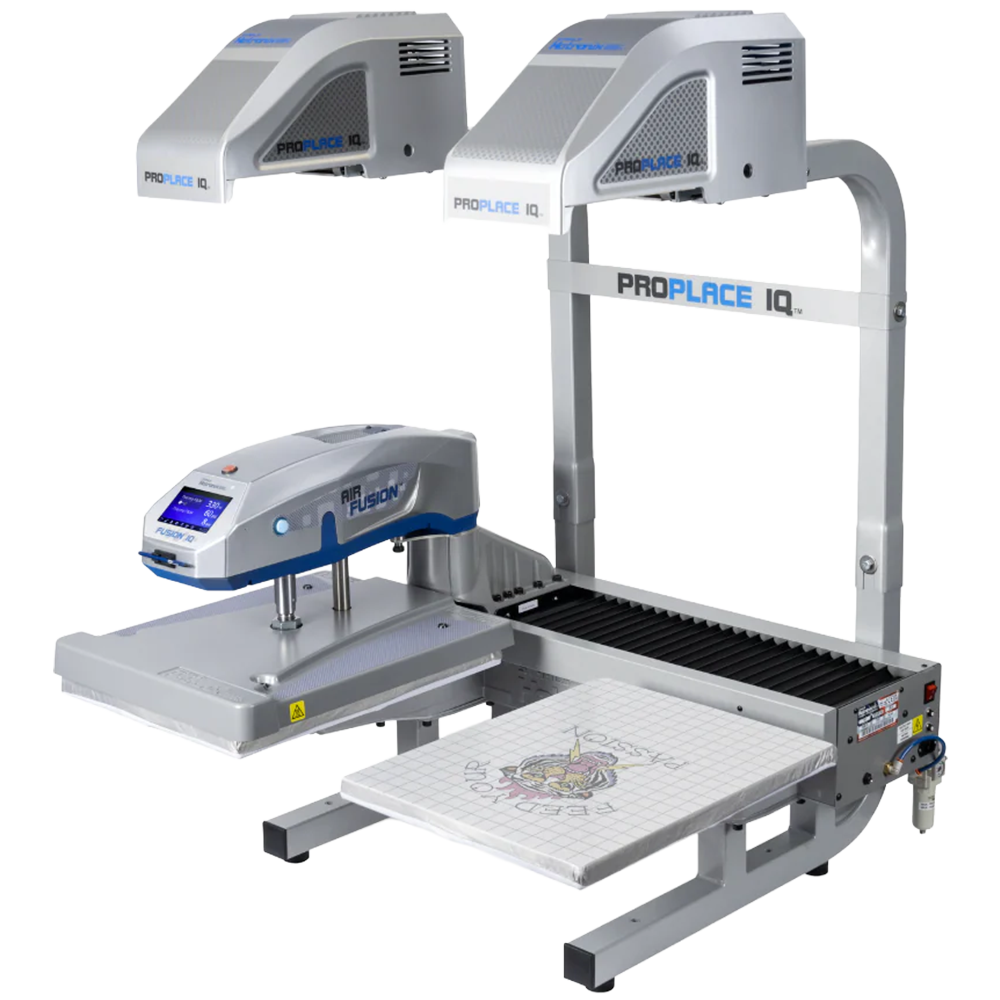
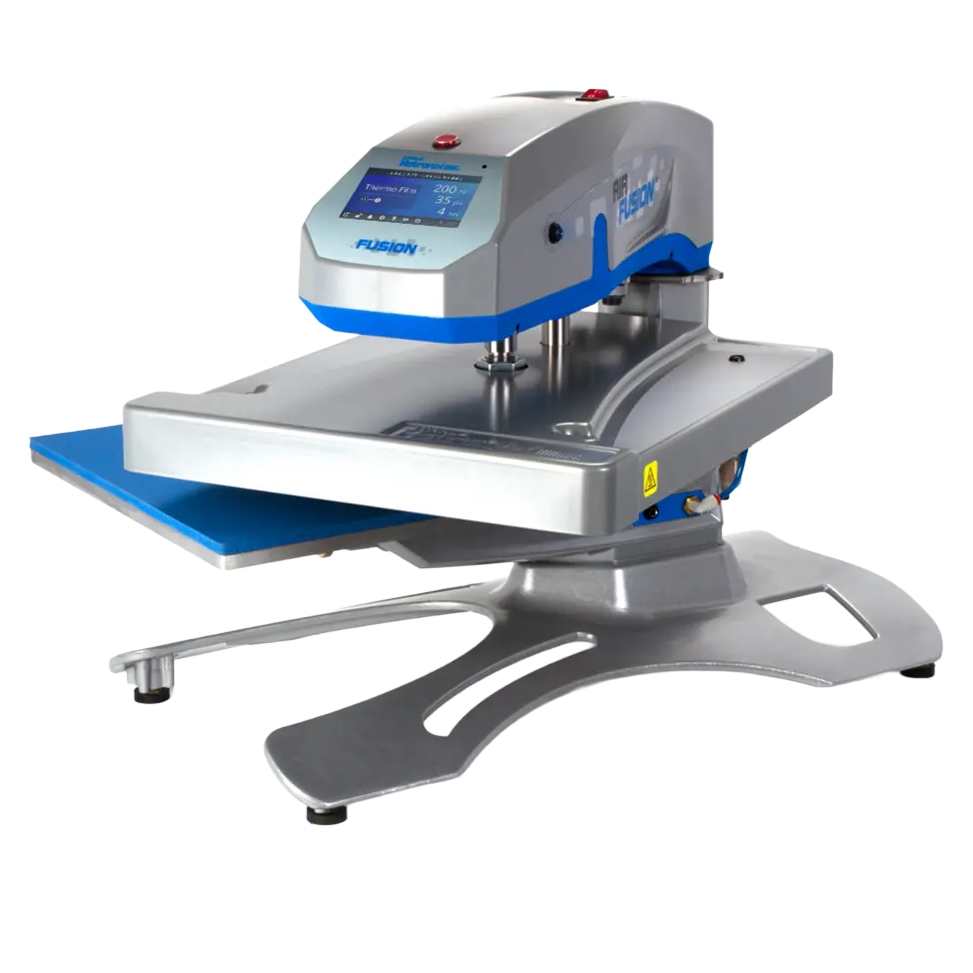
Applying the transfer requires consistent heat and heavy, even pressure. The Hotronix Fusion IQ Heat Press provides accurate, edge-to-edge temperature distribution. Inconsistent heat or pressure will cause the edges of the transfer to lift, a flaw that is highly visible and unacceptable on dark apparel.
Once your transfers for dark garments are printed and cured, they need to be separated for pressing or shipping. Cutting thousands of transfers by hand is a massive bottleneck in high-volume shops.
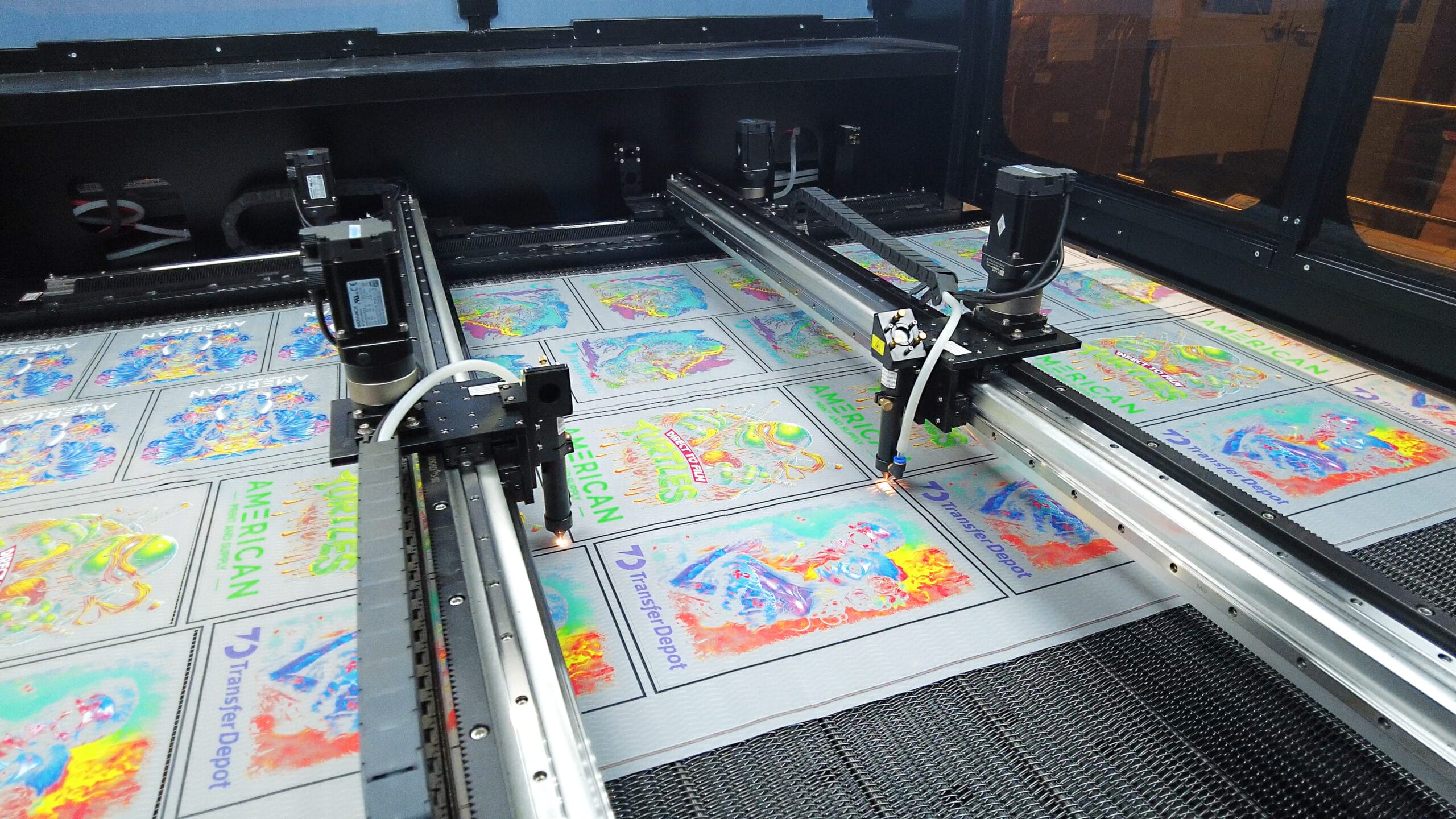
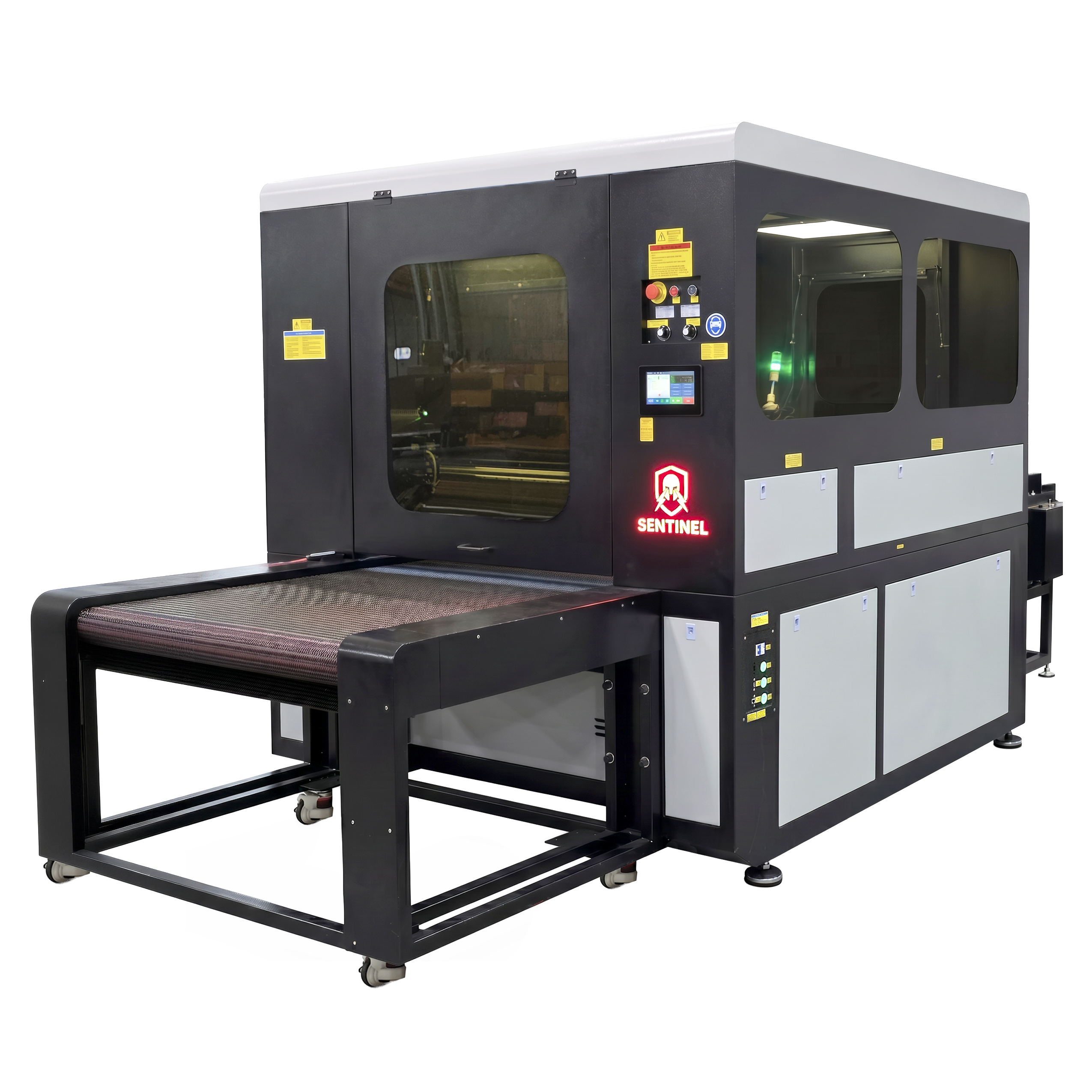
The Sentinel Automated Vision DTF Cutter eliminates this manual labor. Designed specifically for DTF workflows, it uses an overhead camera system to scan and laser-cut transfers automatically in real time. It requires no DXF or CAD files, making it the most intelligent and efficient way to process rolls of transfers into press-ready individual graphics. It easily outpaces the fastest printers, processing hundreds of transfers per hour with total precision.
Success in the custom apparel industry relies on dependable equipment and strong, accessible support. Finding the best DTF setup for dark fabrics means investing in a complete ecosystem—printers, RIP software, premium consumables, and post-press automation—that all communicate and function together seamlessly.
At American Print & Supply, we provide comprehensive, white-glove installation and workflow training. We ensure your machines are optimized for your specific production needs from day one. By eliminating workflow bottlenecks and equipping you with reliable technology, we help you focus on printing high-quality garments and scaling your business with confidence.