At 2,000 usable sq ft per month

Menu
Close
SUPER HYDRA / EXPANDED GAMUT DTF
Six printheads. Nine colors.
A complete print-and-finish system, built around your next production chapter.
CMYK + White + Red, Green, Blue & Orange
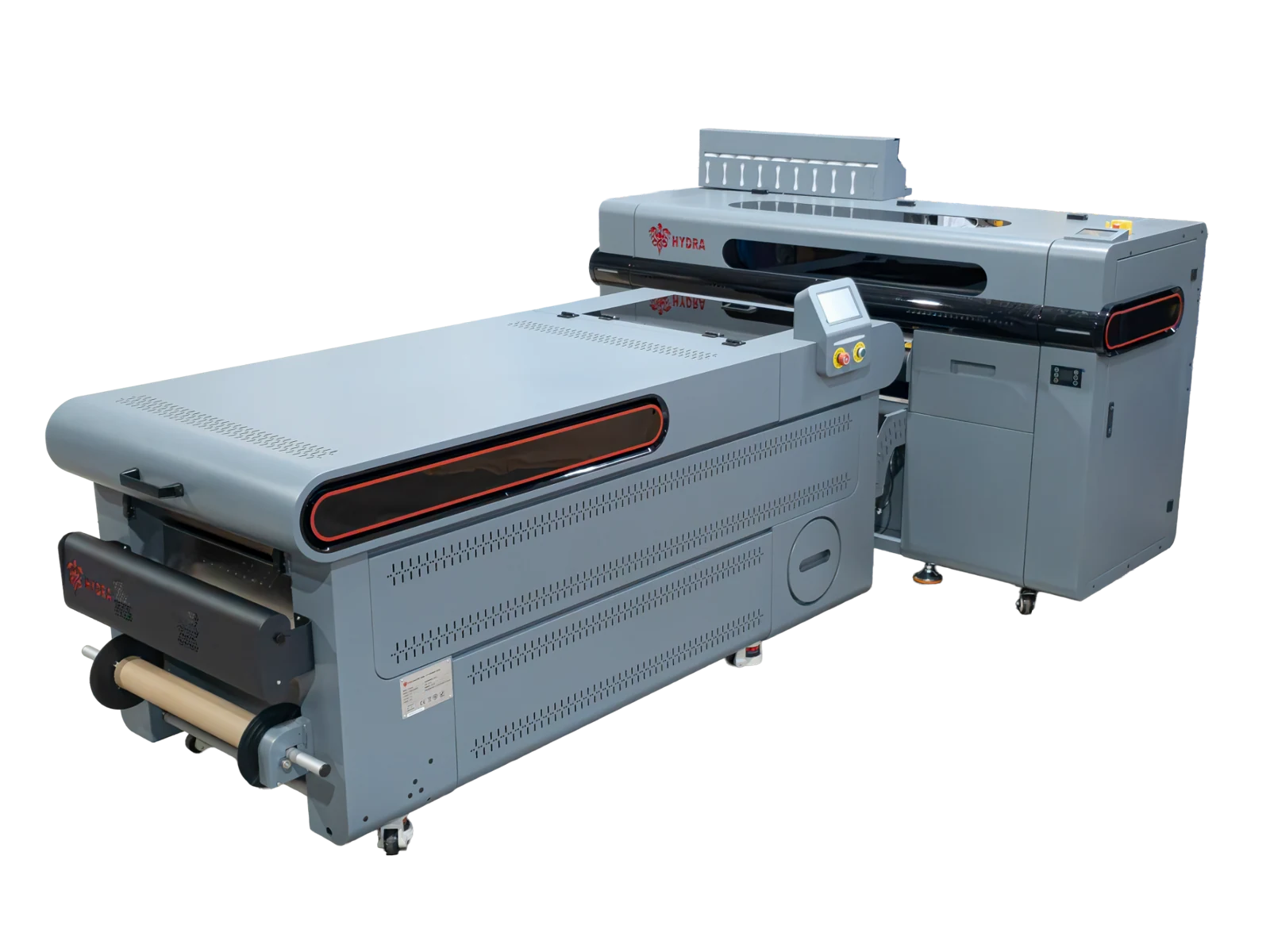
THE PLATFORM BEHIND THE POSSIBILITIES.
Get to know the hardware. Then take a closer look at how the system fits together.
Take the machine tour ↓Confirm print modes, production speeds, package contents, and site requirements with your Super Hydra quote.
View facility layout + site requirements ↓YOUR FRONT-ROW LOOK AT SUPER HYDRA.
Explore the real machine, one detail at a time. Choose a feature to open its close-up.
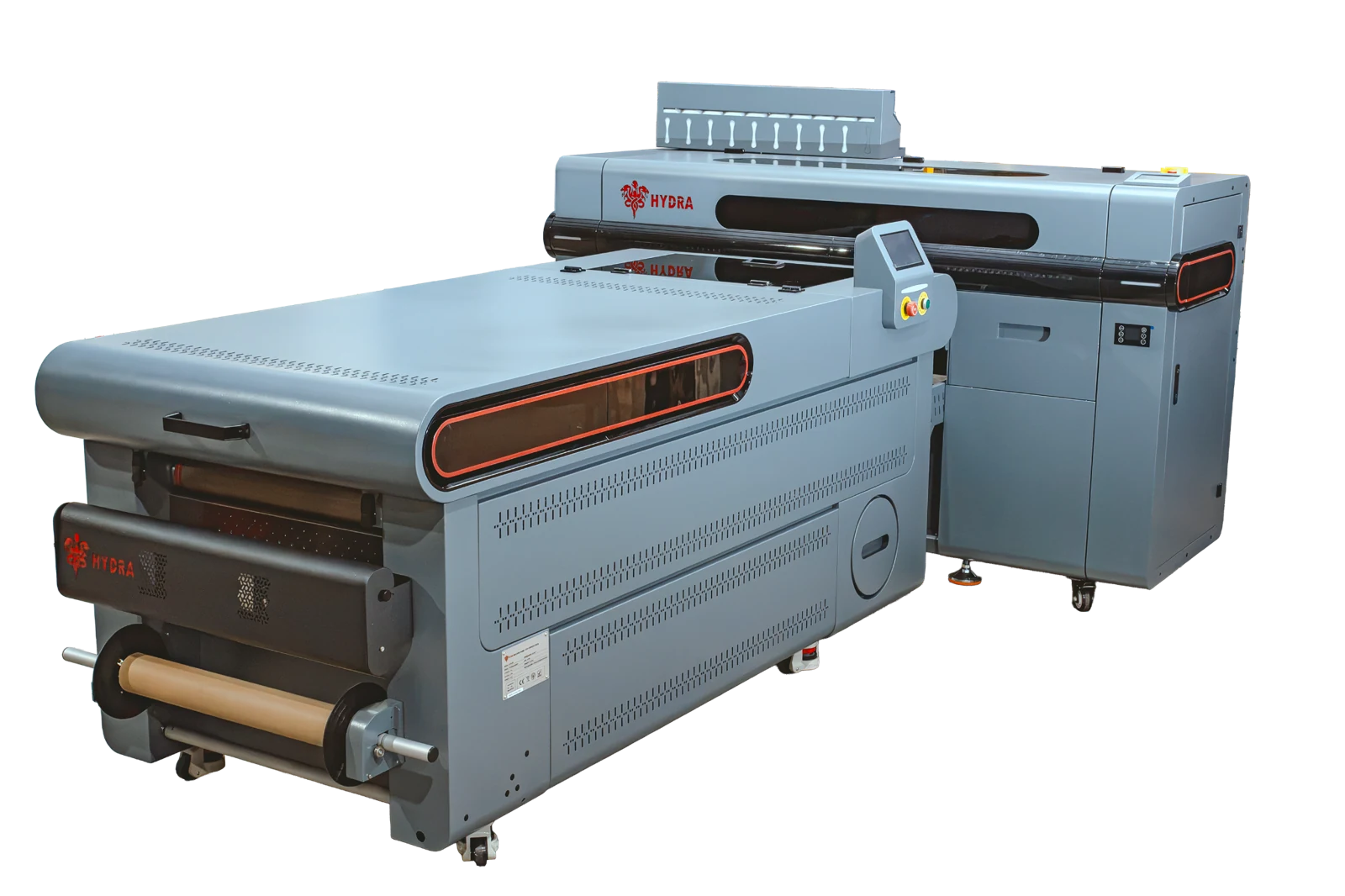
SYSTEM OVERVIEW
Explore the print engine, ink supply, laser detection, powder system, curing, controls, and film path using actual Super Hydra photographs.
Choose a numbered feature or start the guided tour.
THE SYSTEM IN MOTION.
From the print carriage to the curing chamber, follow the redesigned system through a production run.
Super Hydra product film · 1 minute 10 seconds
EXPAND YOUR PALETTE.
CMYK and white form the foundation. Dedicated red, green, blue, and orange inks expand the palette for your transfers.
Select a swatch to learn where it fits. These are the nine ink colors in the Super Hydra configuration.
A dedicated red ink joins CMYK, white, green, blue, and orange in the nine-color configuration. Evaluate your red artwork on a physical sample.
On-screen swatches identify the inks. Physical samples are the best way to evaluate printed color on your garments.
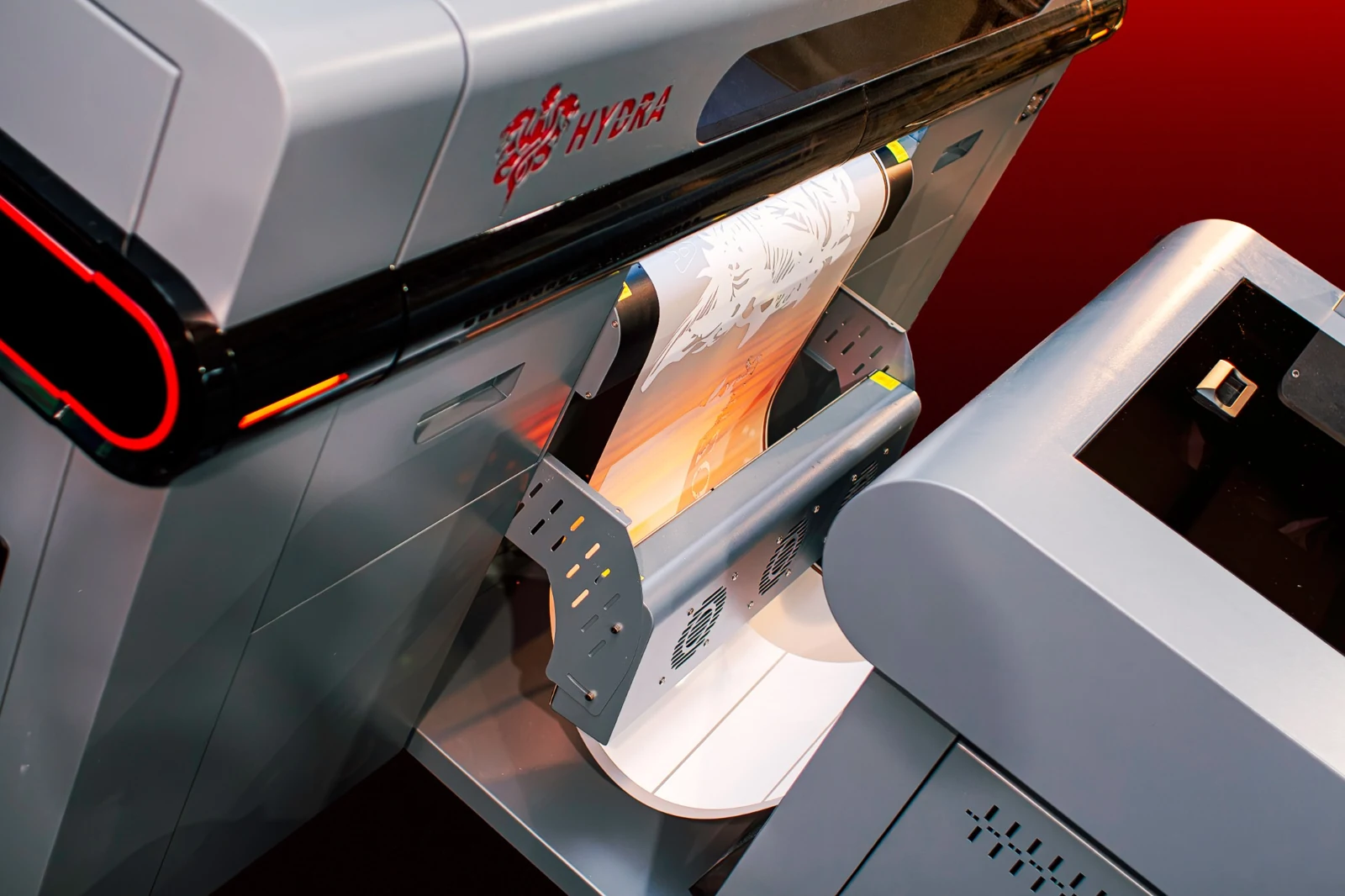
PUT THE COLOR IN YOUR HANDS.
Start with the designs you actually sell. Ask us about print samples so you can evaluate color, fine detail, and gradients in person.
Nine ink colors · Dedicated expanded-gamut channels · Two white tanksINSIDE THE TECHNOLOGY.
Magnetic drive, dual-laser film-lift detection, and communication between the printer and duster.
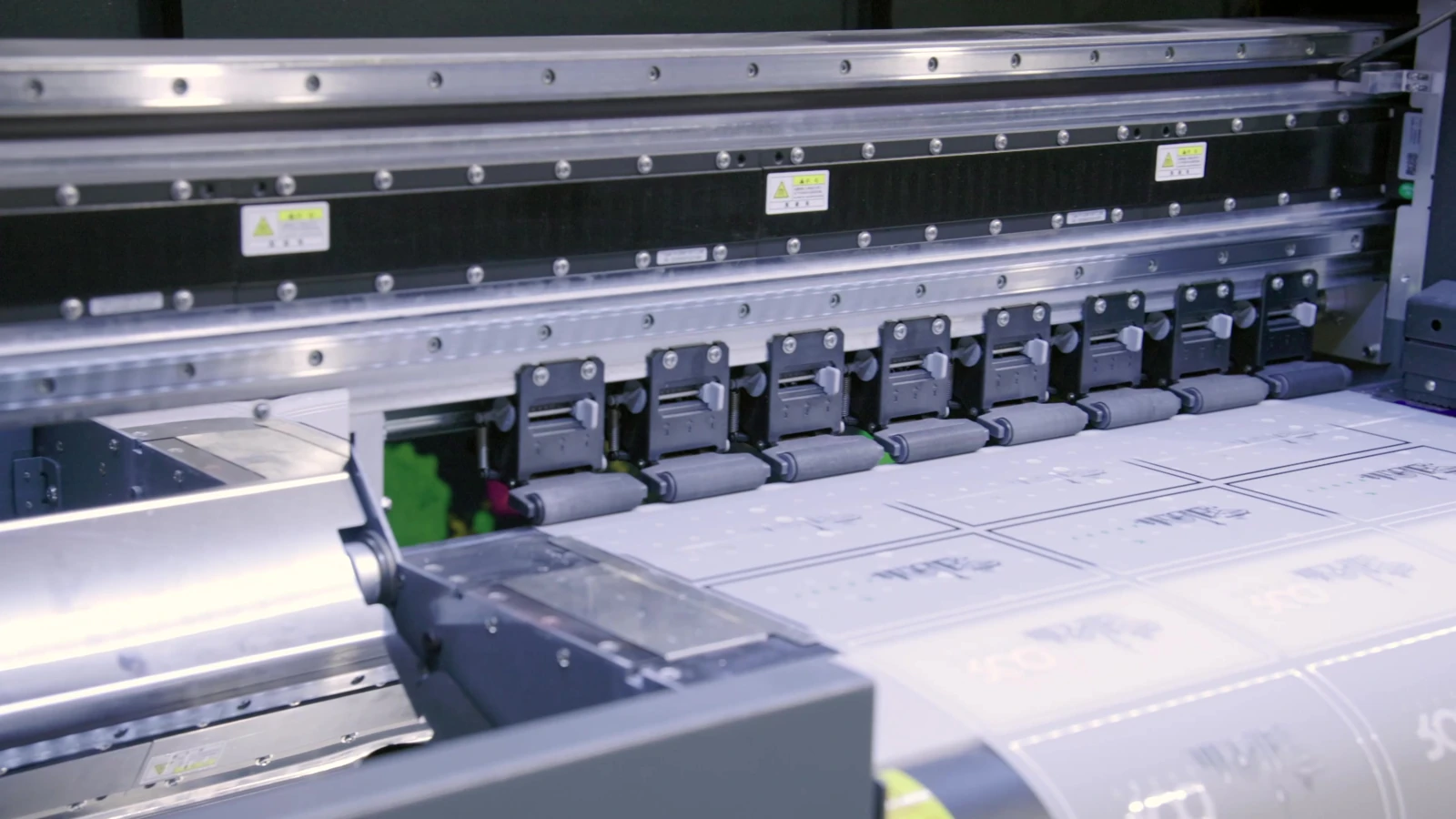
Magnetic carriage drive on a dual-rail platform. Explore the motion system that carries the printheads across the film.
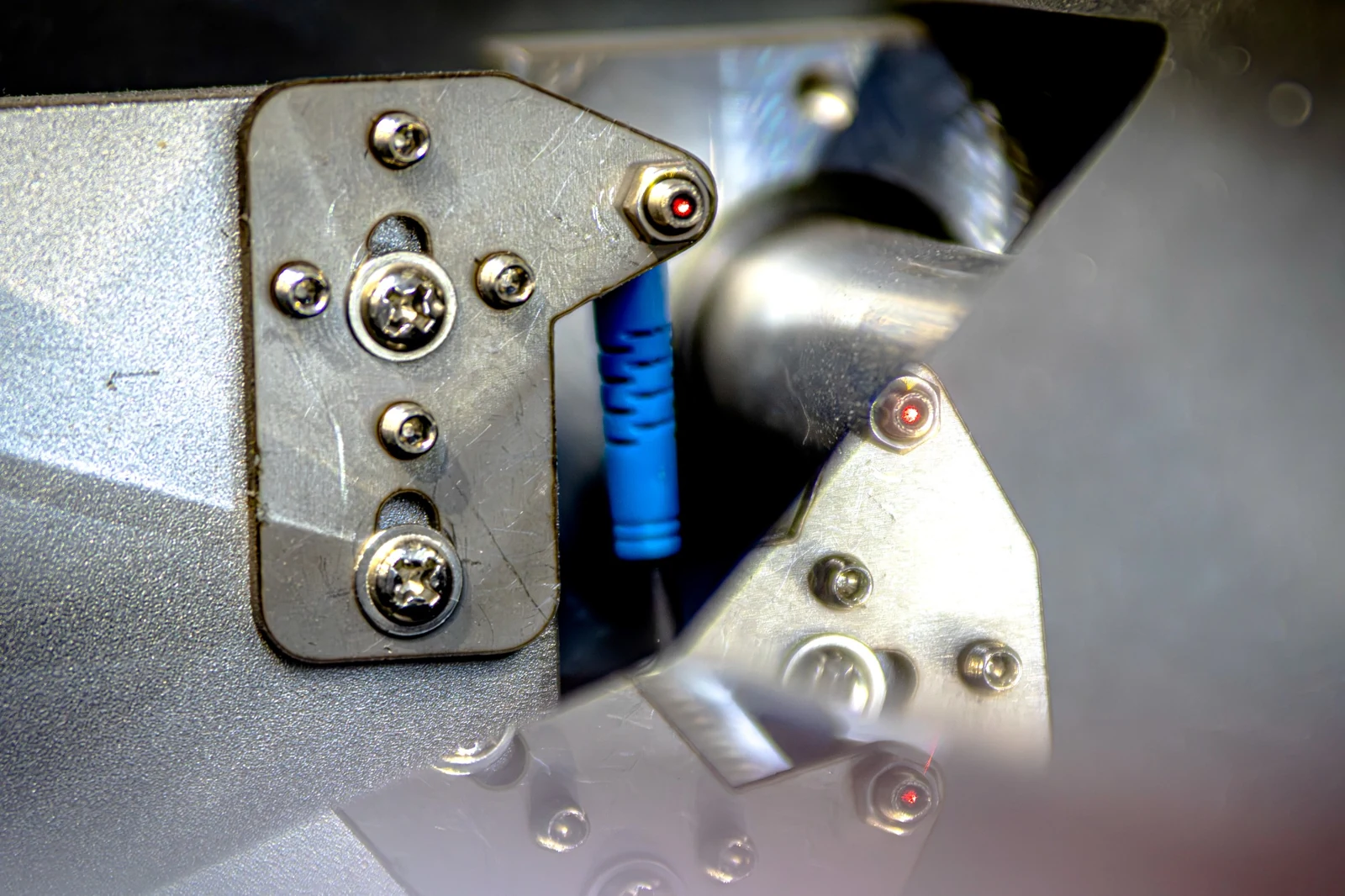
Dual lasers monitor the film for lift in the print area, helping identify conditions that can lead to a headstrike.
Communication connects the printer and duster, bringing the printing and finishing stages together as one coordinated system.
PLAN YOUR PRODUCTION SPACE.
A clear view of the equipment, work areas, and power connections—before you plan your installation.
Includes all three work areas shown.
Equipment only: 11′4″ × 6′8″ · 136 × 80 in
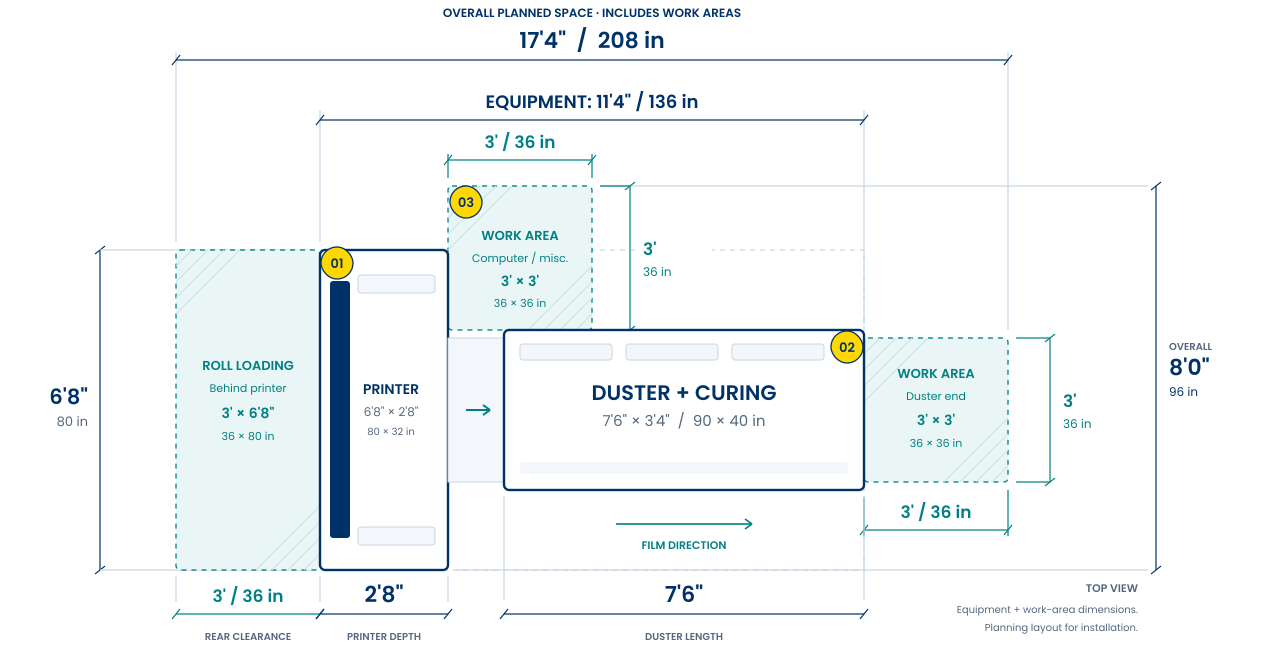
The 17′4″ × 8′0″ overall layout includes 36 inches behind the printer for loading rolls and a 3′ × 3′ work area at both the computer and duster end. Plan any additional aisles, delivery routes, and service access around this space. We’ll review your layout, work-area clearances, ventilation, delivery path, and electrical connections before installation.
THE COLOR GETS ATTENTION. THE NUMBERS MATTER.
Compare buying finished transfers with producing the same volume in-house. Adjust the assumptions and watch your estimated payback change.
Use the same usable transfer area for both options.
Include supplier shipping.
Equipment, freight & setup.
Per raw sq ft, before usable-yield adjustment.
Accounts for layout waste and reprints.
Estimated allowance for labor, electricity, maintenance and other running costs. Calculated on materials after yield; adjust to match your shop.
At 2,000 usable sq ft per month
Cumulative operating savings minus initial investment.
No email needed to calculate. Your inquiry can include this scenario.
Monthly savings = outsourced transfer cost − in-house materials − labor & operating contingency.
Materials = usable square feet ÷ yield × materials cost per raw square foot.
Labor & operating contingency = materials after yield adjustment × contingency percentage. This simplified allowance estimates labor, electricity, maintenance and other running costs together. Actual operator hours are not modeled. It excludes the equipment purchase and is not a fixed monthly charge.
Simple payback = installed investment ÷ positive monthly savings. Annual operating savings equals 12 months of savings and does not deduct the initial purchase. The chart does deduct the purchase.
This compares the same finished-transfer volume at constant costs. It assumes no new sales, does not validate production capacity, and excludes financing, taxes, depreciation and resale value. Common garment and pressing costs cancel only when they are the same in both workflows. Add any differences to your inputs.
LET’S GET PRACTICAL.
Cyan, magenta, yellow, black, white, red, green, blue, and orange. The system uses two white tanks; white counts as one ink color.
Review the printer, matching duster, RIP software, computer, starter supplies, installation, and training with the team. Your quote defines the exact package and any separately priced services or accessories.
SuperGamut provides onsite setup and operator training. Confirm the schedule, scope, and site preparation requirements with your package. Ask the team to explain support and warranty coverage for your selected system.
This calculator compares outsourced transfers with new in-house production. An upgrade comparison needs your current machine’s costs and production constraints; ask us to work through that scenario with you.
Plan for a climate-controlled production space with power, environmental controls, and room to operate and maintain the complete system.
Review the full site requirements with SuperGamut before scheduling delivery and installation.