
ARTEMIS / TWO-HEAD COMMERCIAL DTF
Reliable
Commercial
DTF Printing.
Bring DTF production in-house with a 24-inch, two-head printing system. Everyday CMYK + white. A matching duster. A complete setup, backed by onsite training.
Explore the machineFULL POTENTIAL.
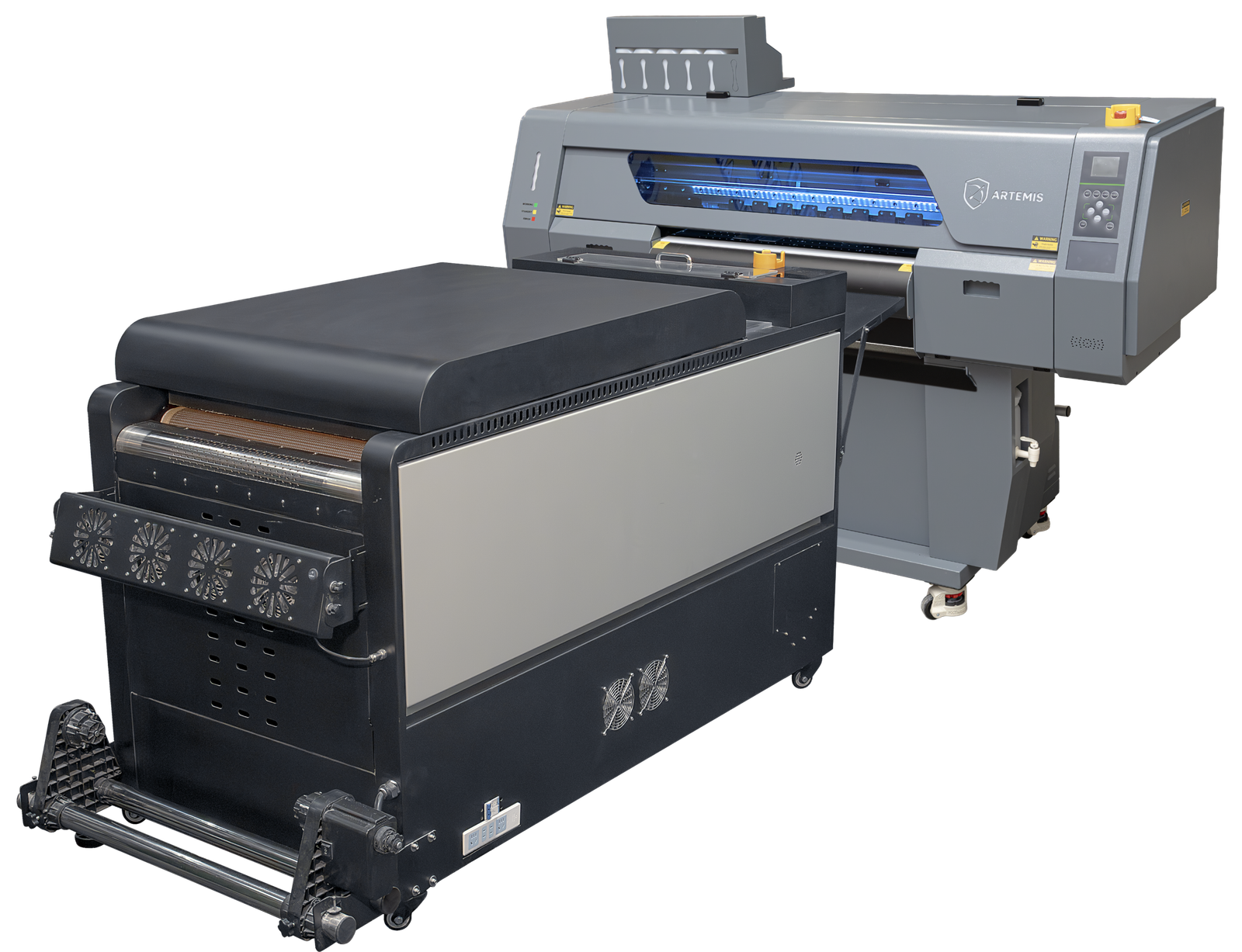
ARTEMIS / COMPLETE PRINT + FINISH SYSTEM
THE PLATFORM BEHIND YOUR PRODUCTION.
Meet the
platform.
Commercial-duty printing with the features that make the working day easier: powered film feed, heated dampers and built-in ink agitation.
Take the machine tour- Printing process
- Direct to film (DTF)
- Print engine
- 2 × Epson i3200 printheads
- Color configuration
- CMYK + white
- Roll media width
- 24 inches
- Maximum print width
- 23.6 inches
- Print modes
- 4, 6 and 8 pass
- Production reference
- 100+ sq ft/hour at 6 pass
- Powder & curing
- Matching 24-inch powder shaker / duster
Production speed is a published reference, not a guaranteed finished-output rate. Artwork, coverage, settings and the curing workflow affect results.
YOUR FRONT-ROW LOOK AT ARTEMIS.
Get closer.
Meet the machine.
Explore the platform from the print engine to the matching duster.
THE COMPLETE ARTEMIS SYSTEMFull system
One connected production setup.
Bring printing, powder application and curing into your shop with a two-head printer and matching 24-inch duster. Build the rest of your workflow around the transfers you make.
Print. Powder. Cure. Collect.The tour uses the complete system photograph. Internal ink-system components are described rather than shown in detail.
EVERYDAY COLOR. COMMERCIAL AMBITION.
Your artwork.
A full-color workflow.
CMYK builds the color. White provides the underbase. Put both to work in a roll-fed system designed for DTF transfer production.
CMYK + white
Two printheads. One practical color configuration.
Need a wider ink palette? Ask us to compare Artemis with our expanded-gamut platforms.
MORE THAN A PRINTER.
Start with
the complete setup.
Equipment, starter supplies, software and hands-on training. Build a production workflow with the team that installs it.
Your written quote confirms the duster model, RIP edition, package contents, freight and installation scope.
- Artemis 24-inch, two-head DTF printer
- Matching 24-inch powder shaker / duster
- Starter laptop + RIP software
- One 24-inch × 328-foot roll of DTF film
- Six 1-liter ink bottles: CMYK + two white
- One bottle of DTF cleaning solution
- 10 lb of adhesive powder
- Alignment microscope
- Onsite installation and operator training
PLAN YOUR PRODUCTION SPACE.
Make room
for your Artemis.
A clear view of the equipment, work areas and power requirements—before you plan your installation.
Overall length × width from the 2026 floor plan.
Printer: 6′5″ × 2′6″ · Shaker: 6′4″ × 2′9″
15-inch gap shown between units.

EXTERIOR VENTILATION REQUIRED
Vent the duster exhaust outdoors.
The exhaust connection is on the opposite side of the duster from power connection 02, shown as E on the plan. Plan the route to the exterior with the installation team before delivery.
Plan the room around the system.
Allow access behind the printer for roll loading, at the operator station and at the shaker for collection. We’ll review your work-area clearances, ventilation, delivery path and electrical connections before installation.
THE NUMBERS BEHIND THE NEXT MOVE.
What could Artemis
change for your shop?
Compare buying finished transfers with producing the same usable area in-house. Adjust the assumptions to fit your shop.
These are illustrative operating assumptions. Enter your actual installed quote to estimate simple payback.
YOUR ESTIMATED SCENARIO
Before financing and taxes
- Buying finished transfers
- —
- Producing in-house
- —
- Materials after yield
- —
- Labor + other costs
- —
No email needed to calculate. You can include the scenario in an inquiry.
How this estimate works
Materials = usable area ÷ yield × material cost per raw square foot. Labor and operating contingency = materials after yield × contingency percentage. Monthly operating savings = outsourced cost − materials − contingency. Annual savings = monthly savings × 12. Simple payback = installed investment ÷ positive monthly savings.
This is a cost comparison, not a production-capacity model. It assumes the same usable transfer volume and constant costs, with no additional sales. The percentage allowance does not model actual operator hours or fixed monthly expenses. It excludes financing, taxes, depreciation and resale value. Shared garment and pressing costs cancel only if equal in both workflows; account for differences in your assumptions.
LET’S GET PRACTICAL.
Before you
make the move.
Who is Artemis for?
Artemis is an entry-level commercial-duty DTF system for shops bringing transfer production in-house or moving beyond a smaller setup. Review your artwork, order mix and daily volume with the team to select the right configuration.
Does Artemis use expanded-gamut inks?
The published Artemis configuration is CMYK plus white. If you need expanded-gamut or fluorescent options, ask the team to compare the other SuperGamut platforms with your artwork.
How fast does it print?
The published reference is 100+ square feet per hour in 6-pass production mode. Actual output depends on artwork, ink coverage, settings, film and the complete powder-and-curing workflow. A representative job is the best starting point for a production discussion.
What software is included?
The current listing names Print EXP as the print driver and Digital Factory V11 as the RIP. It also labels the RIP as an upgrade in the specifications, so your written quote should confirm the included edition, license and computer configuration.
Is onsite training required?
Yes. The Artemis listing specifies mandatory onsite installation and training. The team will confirm the scope, scheduling and facility requirements with your quote.
What warranty is available?
The published listing describes 6–12 months of coverage with extension options. Confirm the exact term, covered components and any extended coverage in your written quote.
Can the calculator compare an existing printer upgrade?
This calculator compares outsourced finished transfers with producing the same usable area in-house. An equipment upgrade needs a separate comparison using your current printer’s costs and production constraints.